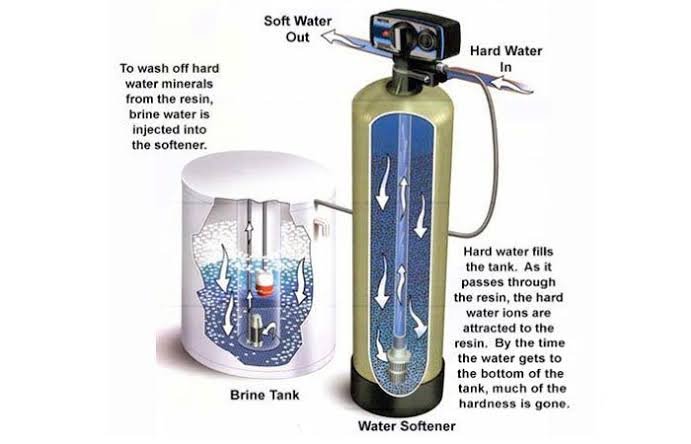
A comprehensive description of high efficiency water softener functions and costs, as well as guidelines on how you can select the best one for your home.
High Efficiency Water Softener:
What It Is, How It Works, and How to Choose One?
If your dishes end up being unevenly rinsed or your shower glass is floating around and your heater appears to be operating more than it should, then hard water could be the cause. A high-efficiency water softener can fix this by having significantly smaller amounts of water and salt than those many of us were raised with. This is important in terms of monthly costs or, for those using a septic or well system, also for your equipment.
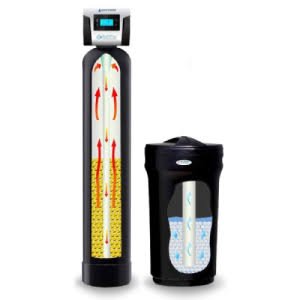
A water softener with high efficacy uses an exchange unit that removes magnesium and calcium, which are the minerals that cause water to be “hard,” using demand-initiated regenerative technology instead of a fixed timer.
Simply put, it only regenerates after you’ve had sufficient soft water to warrant it; that’s the main reason it requires less water and salt than earlier models.This guide explains the way these systems function in relation to traditional salt-free and standard options and how to measure one appropriately, what certificates actually indicate, how much is the cost of owning one, and how to avoid the blunders which cause the majority of complaints regarding softeners.
Why Hard Water Is Worth Solving?
It is measured as grams per gallon (GPG) or milligrams per liter of calcium carbonate. Anything less than one GPG is considered to be soft. Anything above 7 GPG is typically classified as hard, and above 10.5 GPG as very hard.
- The effects begin to show slowly before they appear all at once:
- Scale buildup in plumbing, water heaters, and other appliances
- Soap and detergent that won’t lather properly
- Spotting on dishes and glassware
- Dry feeling, dull hair and skin after washing
- The lifespan of washing machines, dishwashers and water heaters decreases
- This isn’t a huge issue in itself, but over the course of several years it will add up to costs for energy and replacement expenses.
- That’s the real reason softening exists — not comfort alone, but protecting everything water touches in your home.
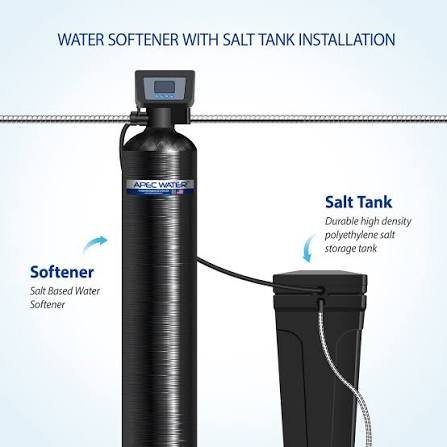
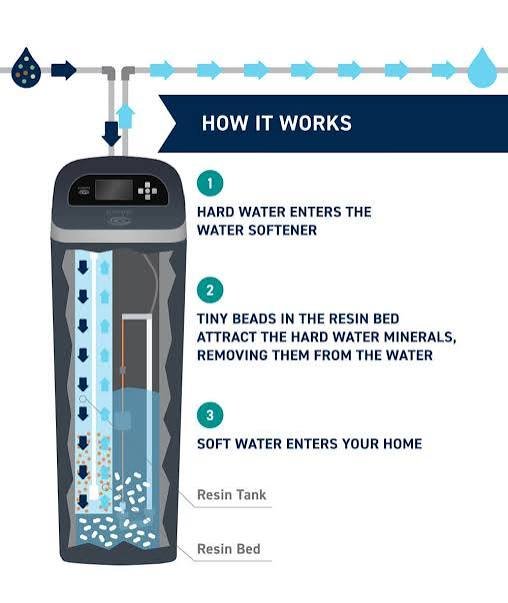
How a High Efficiency Water Softener Actually Works?
The core difference between a high efficiency water softener and an older unit isn’t the tank — it’s the timing of regeneration.
Intake:
The hard water is absorbed by the tank, which is filled with resin beads.
Exchange of ions:
The resin converts calcium and magnesium ions that are present in water, in exchange for sodium ions.
Delivery:
The high efficiency water softener is flowing through your showers and faucets and also through your appliances.
Metering:
A flow meter tracks how many gallons you’ve actually used — this is the heart of demand-initiated regeneration (DIR).
Regeneration trigger:
Once the resin’s capacity is nearly used up, based on real usage rather than a clock, the system regenerates.
Brine flush:
The concentrated solution of salt that restores the resin’s capacity to exchange ions.
Reset and rinse:
The remaining brine and minerals are flushed down the drain, and the cycle then resets.
A standard timer-based softener regenerates on a fixed schedule whether you need it or not — which means a two-person household ends up wasting salt and water on the same cycle a family of six would need. Demand-initiated regeneration is what closes that gap.
Types of Water Softening Systems Compared
Not every “softener” actually removes hardness minerals, and that distinction matters more than most buying guides admit.
Type How it works Salt use Water use Best suited for
- Standard timer-based softener Regenerates on a fixed schedule high efficiency water softener Simple, budget setups
- High efficiency water softener Regenerates based on metered use Low to moderate Low Most households seeking real savings
- Dual-tank high efficiency water softener Two resin tanks alternate, no interruption Moderate Moderate Larger households needing continuous soft water
- Salt-free conditioner (TAC) Crystallizes minerals instead of removing them None Minimal Scale prevention without sodium
- Potassium chloride softener Same ion exchange process, potassium instead of sodium Moderate (potassium) Low Sodium-sensitive households
- A salt-free conditioner doesn’t technically soften water — it prevents scale from forming without removing hardness minerals from the water itself. If a lab test shows your water actually needs hardness removed, not just prevented from scaling, a true ion exchange softener is the right category to shop in.
Who Actually Needs One?
A high efficiency water softener is something you should be looking into if:
- Have tested hardness above roughly 7 GPG
- Already see scale on fixtures or inside appliances
- Notice soap and detergent not lathering well
- Rely on a private well with confirmed hardness
- Pay for metered water or run a septic system, where efficiency directly lowers cost
- What are you planning to achieve to increase the longevity that your heater, or dishwasher?
- It’s probably unnecessary if your utility reports hardness under 3 GPG, or you already have a conditioning system high efficiency water softener that’s performing well. The starting point should always be an actual hardness test, not a guess based on symptoms alone.
Sizing: How Much Capacity You Actually Need
Undersizing a softener leads to premature, wasteful regeneration. Oversizing means paying more upfront than necessary. Getting this right comes down to a simple calculation:
Daily softening need (grains) = household size × average gallons used per person per day × hardness in GPG
If a family of four uses roughly 80 gallons of water per day and the water tests at 10 GPG, this equates to around 3,200 grains each day. An effective system that lasts for a few days between renewals is expected to have the amount to be between 22,000 and 32,000 grains.
Family size: A typical grain capacity is required (at 10 GPG)
| 24,000 grains | 1–2 people |
| 32,000 grains | 3–4 people |
| 40,000–48,000 grains | 5–6 people |
| 64,000+ grains | 7+ people |
These numbers are starting points, not guarantees — always confirm with an actual hardness test rather than sizing off estimates alone.
Certifications That Actually Mean Something
- “High efficiency water softener” gets used to describe marketing in a way that is not strictly defined; therefore, it’s important to identify which labels have been independently verified and which are just branding.
- The NSF/ANSI 44 is the primary safety and performance standard that is used by high efficiency water softeners. It’s the one you should be looking into first.
- The WQA Gold Seal that is awarded through the high efficiency water softener Quality Association confirms the product’s claims of performance have been independently confirmed.
- California Energy Commission (CEC) standards set specific limitations on salt and water usage for softeners manufactured in California, and a few other states use similar standards.
- EPA WaterSense applies predominantly to fixtures and not softeners; however, it demonstrates the same eco-conscious features consumers should be looking for.
- If a product boasts of high efficiency water softener but doesn’t refer to certification from NSF/ANSI 44 as well as WQA Gold Seal, consider the claim untrue instead of assuming it.
What It Actually Costs to Own One?
- Prices for high efficiency water softener vary significantly based on capacity or brand, as well as region; therefore, treat this as a directionally oriented range rather than a price.
- Entry-level units sit at the lower end of the consumer pricing range and typically cover smaller households.
- Softeners for DIR in the mid-range (32,000-48,000 grains) tend to be the most popular option for homes with families and are located at the middle of the price spectrum.
- Premium models, or those that are smart-connected, are the most expensive, but usually include app-based monitoring as well as dual tank configurations.
- Professional installation adds a separate cost that depends heavily on your plumbing layout and local labor rates.
- Ongoing costs are mostly salt, plus occasional resin cleaner and filter changes — minor compared to the unit and install cost.
- The financial case for high-efficiency models comes from the long game: less salt purchased over years, a smaller water bill impact from shorter regeneration cycles, and appliances that last longer because they’re not fighting scale buildup.
Installing It: DIY or Professional
Factor DIY Professional
- Cost Lower — unit only Higher — unit plus labor
- Plumbing complexity Requires cutting into the main line and installing a bypass valve Handled for you.
- Warranty May void coverage on some brands Often required to preserve warranty.
- Drain and electrical Self-installed, must meet code Code-compliant by default.
- Best for Homeowners comfortable with plumbing Most households
- If you do go the DIY route, the general sequence is: choose an installation point after the main shutoff and before the water heater, install a bypass valve, connect the inlet and outlet lines, run a drain line to an approved drain, connect the brine tank overflow, power the unit, program the hardness and household settings, then run an initial regeneration cycle to confirm everything’s working.
Maintenance and the Mistakes That Cause Most Problems
A high efficiency water softener will require minimal maintenance, but not taking care of the basics is what causes the majority of complaints to originate.
Keep up with:
- Checking salt levels monthly and refilling before the tank runs dry
- Using the salt type your manufacturer recommends — not rock salt
- Cleaning the brine tank yearly to prevent salt bridging
- Testing water hardness periodically to confirm the system is still performing
- Checking the bypass valve and drain line for leaks
Common mistakes:
- Using the wrong salt, which causes a hardened crust called salt bridging that blocks proper brining
- Undersizing capacity, forcing frequent, wasteful regeneration
- Skipping the hardness test and guessing at settings
- Installing the brine tank somewhere prone to freezing
- Not paying attention to the rising water or salt bill, which typically signals an issue with the valve
- If the water is still hard even after installation, the main reasons are an open bypass valve or an improper setting for the hardness or resin that is nearing the limit of useful lifespan.
A Note on Sodium and Health
Softened water may have added sodium; however, generally in amounts that aren’t necessary for the majority of diets. If anyone within your household adheres to the medically recommended low-sodium diet, you should talk to an expert about the use of a potassium chloride device or, alternatively, adding reverse osmosis units specifically designed for cooking and drinking water.
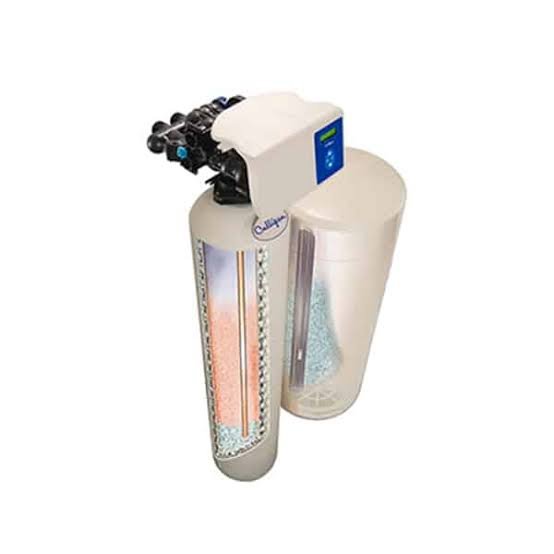
Making the Decision
- Begin by taking a test for the degree of hardness, rather than trying to make a guess based on the symptoms.
- If you are having issues with sodium, you may be interested in sodium-free conditioning or potassium chloride as an alternative.
- Check the location of your home to see if there are any limitations on salt discharges that can force you to use high efficiency water softener systems, as well as salt-free systems.
- Calculate your household’s grain capacity need using the formula above. You have the option of DIY as well as professional installation, based on your comfort level and the warranty’s specifications.Select the NSF/ANSI44 certified models that will meet your needs and budget.If you’re installing professionally, get up to three local estimates and confirm the license before you commit to the project.
FAQs
What does “high efficiency” actually mean for a water softener?
It means the system makes use of demand-initiated regeneraton as well as optimized brine and resin ratios to use less high efficiency water softener and salt each cycle than a typical softener that is timer-based.
Is a high efficiency water softener worth the extra cost?
For most households with moderate to hard water, the salt and water savings over several years typically offset the higher upfront price — especially in larger households that would otherwise regenerate frequently.
What’s the duration of time a reliable high efficiency water softener lifetime is?
The typical life span of these systems is between 10 to 15 years and with routine maintenance. The resin bed as well as the control valve are usually the first components that need replacement.
Do high efficiency water softener really use less salt?
Yes
What size of softener do I require for four members of a family?
Because they are designed to regenerate based on actual water usage instead of following a set time frame, they generally consume significantly less salt than standard models, particularly for smaller households.
Do I need to install a high efficiency water softener on my own?
Yes, if you’re familiar with plumbing. However, the expense of a professional installation can be beneficial in order to keep warranty protection and make sure your drain lines are in compliance with local codes.
Do you believe that softened water is safe to drink?
For the majority of people there’s a good possibility you’re right. If you’re on an ill-health diet low in sodium, you should consult a doctor or think about the possibility of a potassium chloride solution or a reverse-osmosis device that allows you to consume water.
What is the distinction between the high efficiency water softener and the water conditioning systems?
The high efficiency water softener eliminates the elements that contribute to hardness, making use of Ion exchange. A conditioner, which is usually non-salt, stops the accumulation of scale but does not actually remove any minerals from the water.
Will a high efficiency water softener work on well water?
Yes; however, the water from wells should be tested in a lab rather than being estimated because municipal reports on hardness don’t have any value, and well high efficiency water softener could contain other minerals that can affect the sizing.
Conclusion
A high efficiency water softener is the best option for those who already have moderate to very hard water. It lowers the long-term costs of salt and water, and safeguards plumbing appliances and appliances, and reduces the burden on well or septic systems.The choice is made by some specific steps: test the water, measure the system in a fair way, verify authentic certification instead of marketing terminology, and select an installation plan that meets your personal preferences. If you do these things correctly, the remainder of the decision is made automatically.
These information about Projector Rental are gathered from different surveys, medical tests and tech giants like Techradar and more. Our top priority is to provide you valuable information.
For More Details About Different Water Filters Click Here