What a Filtration System for Well Water Actually Does?
If you’re on a private well, nobody is treating your filtration system for well water before it reaches your tap. There’s no municipal plant checking chlorine levels or filtering out bacteria overnight. That job belongs to you, and a filtration system for well water is the equipment that does it.
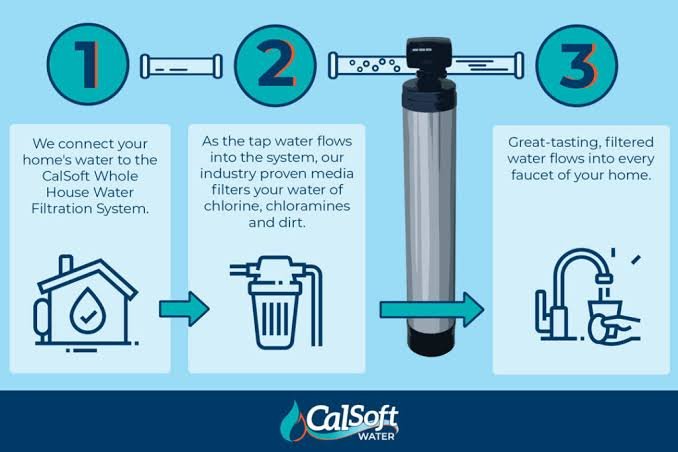
A filtration system for well water is a piece (or combination) of treatment equipment installed where water enters your home or at a specific tap, designed to remove or neutralize whatever’s actually in your groundwater. It could be the presence of iron, sediment, minerals, bacteria or even dissolved chemicals such as arsenic or nitrates, subject to geochemistry and conditions close to your well.
This is the short version A well filtering system for water uses several stages -sediment, softening, carbon, ultraviolet, or reverse osmosis to eliminate specific pollutants depending on what your water tests actually show and not based on speculation n. The last sentence is much more crucial than what most guides say.
Why It Matters More Than People Think?
Private wells aren’t subject to regulation the like city water.There’s no agency showing up to test your filtration system for well water every quarter. If you notice a change within your groundwater, whether it’s an upcoming septic installation an untreated spring which ishes fertilizer down the water table, an old well casing – it’s only you who will be aware, but usually only when a test in the lab detects the issue.
The issue is that those compounds that people are the most worried about, like arsenic, nitrates and bacteria aren’t visible to the naked eye. There is a possibility that water could seem clean and safe, yet cause health risks. Odor, staining and the buildup of scale are serious issues, however they’re not the only pollutants you’re able to See .
The ones that matter most for health are usually invisible.
This is why so many well owners end up treating the wrong thing. They notice rust stains, buy a water softener, and assume they’re covered — when a softener does nothing for bacteria or nitrates.
Who Actually Needs One?
Not every well owner needs the same setup, and not everyone needs a full system at all. Generally, you’re in filtration system for well water territory if:
- You’re on a private well (this is close to universal — almost every well benefits from some level of treatment)
- The water test conducted recently revealed arsenic, nitrates, bacteria or other metals that were elevated.
- There’s a staining or an metallic flavor, or an odor of rotten eggs
- If you have children, the household is pregnant or any other person who is immunocompromised
- Your well lies near agricultural land livestock, an septic system
You may need less than you think if a full lab test comes back clean and your only complaint is aesthetic — taste or smell rather than anything health-related. In that case, a lighter carbon filter might solve the actual problem instead of a full whole-house system.
Test First. Always.
This is the step almost every buying guide skips, and it’s the one that actually saves people money.
Installing a filtration system for well water before testing your water means you’re guessing. You might spend on a system that handles hardness while missing nitrates entirely. Testing first tells you exactly what you’re dealing with, so every dollar you spend goes toward something you actually need.
A certified lab test — not just a free test from a dealer trying to sell you equipment — should check for:
- Coliform bacteria and E. coli
- Nitrates
- Arsenic
- Iron and manganese
- Hardness (measured in grains per gallon)
- pH level
Once you have real numbers, choosing equipment becomes a lot less confusing.
How Well Water Filtration System For Well Water Actually Works?
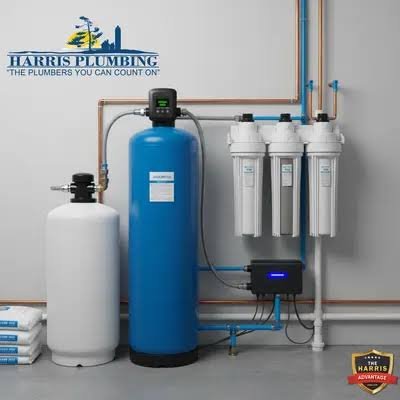
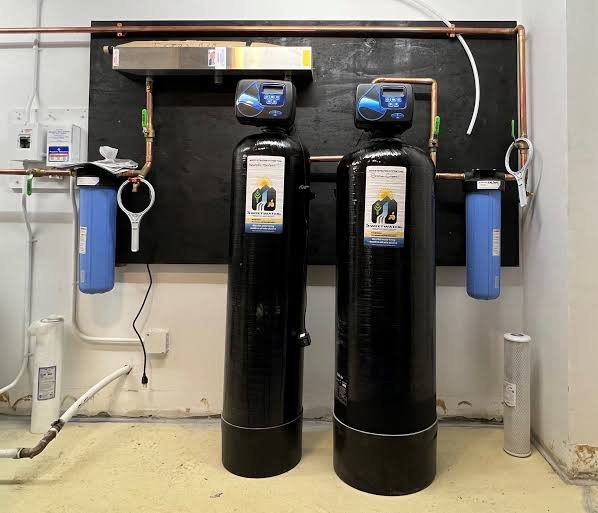
The majority of systems don’t have just one filterThey’re actually a set of filters, each one aiming at an individual aspect:
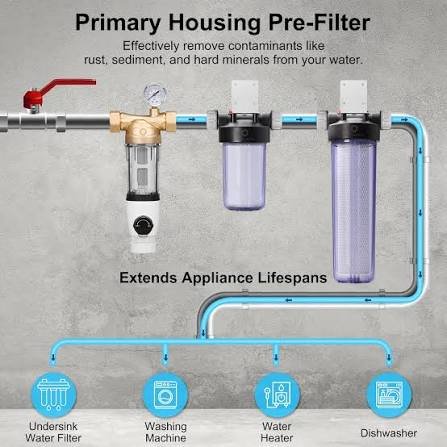
- Sediment filtering captures silt, sand and rust particles before it protects the downstream.
- Softening (ion exchange) exchanges magnesium and calcium in exchange for potassium or sodium and solves the issue of hardness.
- Removal of manganese and iron helps with staining, and has a metallic taste that only softeners won’t solve.
- Carbon filtering gets rid of organic chemical compounds and odors.
- UV disinfection uses ultraviolet-C as a light source to remove the negative consequences of viruses and bacteria without the use of chemicals.
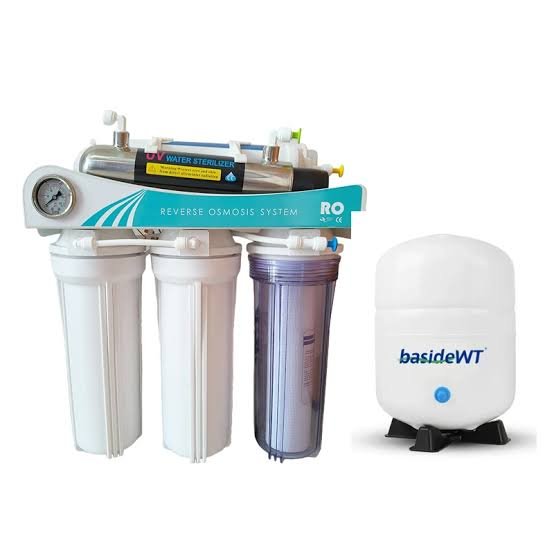
- Reverse Osmosis Usually, it is installed near the faucet within the kitchen. The filtration system for well water is moved across an elastomer, which is used to take away nitrates, arsenic, and other fluids that are dissolving.
No single stage covers everything. That’s the main reason whole-house systems combine two or three of these based on test results.
Types of Systems, Compared
System Type What It Solves What It Won’t Solve Typical Cost Sediment filter Sand, silt and rust Bacteria, chemicals $100-$500 Water softener Hardness (calcium/magnesium) Arsenic, nitrates, and Bacteria $800-$2,500 Iron/manganese filter Metallic taste.
Staining Bacteria, dissolving chemicals $1,000-$3,500 Carbon filter Odor, taste, chlorine byproducts Metals, bacteria $300–$1,500 UV disinfection Bacteria and viruses Sediment, hardness, chemicals $500–$1,200 Reverse osmosis (point-of-use) Nitrates, arsenic, dissolved solids Multiple Whole-house needs (tap-only) $200–$800Full whole-house combo contaminants at once N/A — built around your results $2,500–$7,500+ A common misconception worth clearing up: a water softener and a whole-house filtration system are not the same thing.A softener is one piece of a larger puzzle, built to solve exactly one problem — hardness. If your test shows bacteria or nitrates, a softener alone leaves you exposed. How to Choose: A Practical Framework
This is non-negotiable and comes before any shopping.
- Match your results to the table above. If you have iron staining and bacteria, you likely need two stages, not one.
- Decide point-of-entry versus point-of-use. Whole-house concerns like hardness or bacteria need point-of-entry treatment. A taste or health concern isolated to drinking water might only need a point-of-use RO unit at the kitchen sink.
- Size it to your household. A system undersized for your flow rate (measured in gallons per minute) will bottleneck your water pressure and wear out faster.
- Get quotes from a few local installers, and ask specifically whether they retest after installation — not just before.
- Budget for upkeep, not just the purchase price.
Installation: What to Expect Filtration System For Well Water ?
A typical whole-house installation runs a full day and generally follows this sequence:
- Certified water test and results review
- System sizing based on household size and flow rate
- Site inspection for space and electrical access (UV units and softeners need power)
- Installation near the main line, usually close to the pressure tank
- Calibration and flow testing
- A post-install water test to confirm the filtration system for well water is actually working
- A walkthrough on filter changes and maintenance
That post-install test filtration system for well water is easy to skip and shouldn’t be. It’s the only way to confirm the system is doing what it’s supposed to.
What It Costs Filtration System For Well Water ?
Costs vary widely depending on what your water actually needs, but general ranges look like this:
- Basic sediment and carbon setup: $500–$1,500
- Softener plus iron filter combo: $2,000–$4,500
- Full system with UV and reverse osmosis: $3,500–$8,000
Regional labor costs and local geology both affect final pricing — areas with heavier iron or hardness typically need larger equipment, which raises the cost. Ongoing expenses, including filter replacements, softener salt, and UV bulb changes, usually run $150–$400 per year.
If you’re comparing quotes from installers “near me,” it’s worth asking whether their pricing reflects your specific regional water conditions or a generic national estimate — the two can differ meaningfully.
Regional Water Differences Worth Knowing
Groundwater composition isn’t uniform, and it shapes what kind of system actually makes sense:
- Agricultural areas tend to have higher nitrate levels from fertilizer runoff.
- Bedrock and granite regions are more prone to arsenic.
- Coastal aquifers can show elevated sodium from saltwater intrusion.
- Limestone-heavy regions typically produce harder water.
A good installer or guide should reflect these regional differences rather than offering the same recommendation everywhere.
Common Mistakes Worth Avoiding
- Buying before testing. This is the single biggest and most expensive mistake.
- Assuming a softener does it all. It doesn’t — it solves hardness only.
- Skipping annual retesting.Filtration system for well water conditions shift with seasons and nearby land use.
- Undersizing the system. Leads to pressure problems and shorter equipment life.
- Forgetting UV bulb replacement. An expired bulb looks fine but stops disinfecting.
- Choosing on price alone. The cheapest option rarely matches what your test results actually call for.
If a test shows coliform bacteria or high nitrates, treat it as something to act on promptly rather than something to plan around later — those are the contaminants most directly tied to health risk.
Maintenance That Keeps It Working
- Test annually for bacteria and nitrates
- Test every few years for arsenic, lead, and other chemical contaminants
- Replace sediment filters every 1–3 months
- Replace carbon filters every 6–12 months
- Replace UV bulbs yearly
- Check and refill softener salt monthly
- Replace RO membranes every 2–3 years
- Schedule a professional inspection annually
Alternatives Worth Knowing About
Filtration system for well water isn’t the only option, though most alternatives are short-term or situational:
- Pitcher or faucet filters — cheap, but limited to one tap and lighter contaminant loads
- Bottled water — a reasonable bridge while you sort out a permanent fix, not a long-term plan
- Shock chlorination — addresses a one-time bacterial event, not ongoing protection
- New well or relocation — expensive, but sometimes the only fix if the aquifer itself is compromised
Frequently Asked Questions
Do I need a filtration system if my well water looks clean?
A softener removes hardness minerals only. A filtration system for well water, depending on type, can also target sediment, bacteria, chemicals, and odor — a softener is one piece of that broader picture, not a replacement for it.
How often should well water be tested?
At minimum once a year for bacteria and nitrates, and every few years for a broader panel covering arsenic, lead, and other chemical contaminants.
What’s the difference between a water softener and a water filter?
Yes. Many of the most serious contaminants, including bacteria and nitrates, have no color, smell, or taste. Clear water doesn’t mean safe water.
Can I install a filtration system for well water myself?
Basic sediment or carbon filters are reasonably DIY-friendly. Whole-house systems involving softeners, UV, and plumbing changes are usually best handled by a licensed installer.
Is reverse osmosis necessary filtration system for well water?
Only if your test shows nitrates, arsenic, or high dissolved solids. If those aren’t present, a simpler setup may cover what you actually need.
How much does a whole-house filtration system for well water cost?
Most whole-house systems run between $2,500 and $8,000, depending on what contaminants need to be addressed and how the home is set up.
Will a filtration system fix a rotten-egg smell in my water?
Usually yes — that smell typically points to hydrogen sulfide, and it’s commonly resolved with aeration, an oxidizing filter, or carbon filtration system for well water depending on the concentration.
What does a filtration system for well water remove?
Depending on how it’s configured, it can remove sediment, bacteria, iron, manganese, hardness minerals, nitrates, arsenic, and odor-causing compounds.
Is filtration system for well water legally required?
No — private wells generally fall outside the regulations that govern municipal water, which is exactly why testing and treatment are left entirely up to the homeowner.
Conclusion
There’s no single “best” filtration system for well water — there’s only the right system for what’s actually in your water. Every reliable path forward starts with a certified test, moves into matching your results to the correct equipment, and ends with a maintenance routine that keeps things working long after installation day.
Skip the guesswork, treat the test results as your starting point, and the rest of the decision gets a lot simpler.
These information about Projector Rental are gathered from different surveys, medical tests and tech giants like Techradar and more. Our top priority is to provide you valuable information.
For More Details About Different Water Filtration Click Here