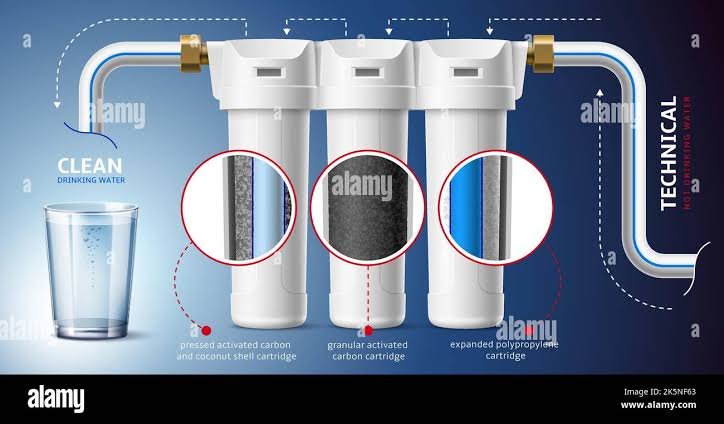
f your tap water tastes like a swimming pool or has a faint chemical smell, you’ve probably come across activated carbon water filter as the fix. They’re the most common filtration technology in the world — used in everything from $20 pitchers to whole-house systems — but most explanations of how they work stop short of what actually matters when you’re choosing one.
An activated carbon water filter purifier is made up of specially treated carbon that can remove chlorine and other volatile organic compounds (VOCs) and odor-producing molecules when water flows through it. It’s not as effective as regular charcoal, but it’s not an all-purpose solution. It’s extremely effective at certain things but not so effective for others. Understanding the distinction is the most important factor in determining the degree to which the filter you purchase will solve your issue.
What Activated Carbon Actually Is?
“Activated” carbon is charcoal that’s been processed with heat and steam or oxygen to open up an enormous number of microscopic pores. This process can push the surface area of a single gram of carbon past 1,000 square meters — which is why it’s so effective at trapping organic molecules on contact.
This is because filtration of carbon isn’t just about separating particles as a sieve. It’s a process that works by adsorption, and the molecules that are causing the contamination physically bond to carbon’s surface while water flows through. The larger the area of surface and time that the carbon’s surface has is, the better the removal.
How Activated Carbon Water Filter Works?
The process is straightforward, but the details explain a lot about why some filters outperform others:
- Water enters the activated carbon water filter and makes contact with the carbon media — granular, block, or powdered.
- Chlorine, VOCs, and other organic chemicals bind to carbon’s internal pores through the process of adsorption.
- Contaminants remain trapped on the carbon while filtered water continues through.
- The water is filtered with less flavor and odor of chlorine and fewer organic contaminants.
- As time passes, pores of activated carbon water filter begin to fill. Once they’re saturated, the carbon ceases to absorb new substances and has to be replaced.
That last step is one people underestimate. An exhausted activated carbon water filter doesn’t just become useless — it can actually become a site for bacterial growth, since trapped organic material provides a food source once the media is no longer chemically active. Replacing cartridges on schedule isn’t a suggestion; it’s the difference between the activated carbon water filter helping and quietly working against you.
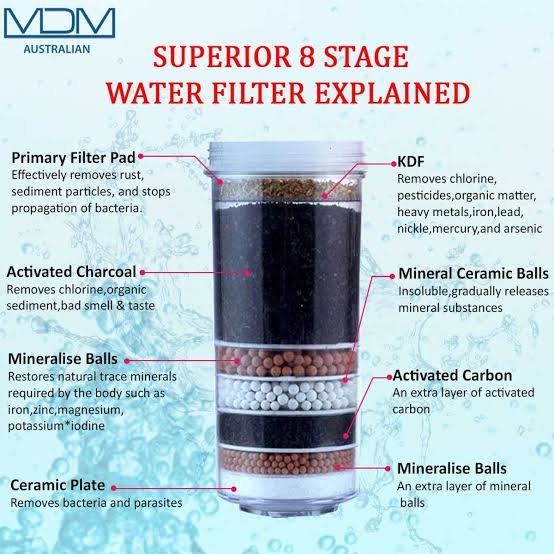
Types of Activated Carbon Filters
Not all activated carbon water filter is built the same way, and the format has a real effect on performance.
Type Form Best For Trade-off
Granular Activated Carbon (GAC) Granules that are loose activated carbon water filter for faucets and pitcher tanks for the whole house More efficient flow; however, water can move around the media, which can reduce the time of contact.
Carbon Block Compressed solid carbon Countertop and under-sink systems More contact and better filtering, but a slower flow rate.
This distinction matters more than most guides let on. Standard GAC handles free chlorine well but is noticeably weaker against chloramine — a chlorine-ammonia disinfectant that more municipal water systems have shifted to in recent years. If your activated carbon water filter utility uses chloramine instead of chlorine, a standard activated carbon water filter may underperform, and catalytic carbon becomes the better choice.
What Activated Carbon Removes — and What It Doesn’t?
This is the section most competing guides skip, and it’s the one that actually protects you from buying the wrong thing.
Commonly reduces:
- Free chlorine (very effectively)
- Chloramine (with catalytic carbon specifically)
- VOCs and certain pesticides
- Taste- and odor-causing compounds
- Some sediment and cloudiness, especially with carbon block
Does not reliably remove unless the product is specifically certified for it:
- Dissolved minerals (it won’t soften hard water)
- Fluoride
- Lead and most heavy metals
Nitrates and Nitrites in Fish (NINF), Bacteria, and VirusThat last point deserves emphasis: a standard carbon filter is not a disinfection device. If you’re in the well activated carbon water filter or are concerned about microbial contamination, carbon filtering alone isn’t the solution. You’ll need it to be paired with UV therapy or another barrier against microbial contamination.
Why Certification Numbers Matter More Than the Word “Certified”?
- Most of the merchandise claims that they are “NSF certified,” but the term “certified” alone says nothing. The most important thing is the quality standards it’s accredited to, since every one of them covers a variety of factors:
- A.NSF/ANSI 42covers aesthetic effects like flavor, smell, and taste of chlorine and the reduction of particulate matter.
- This is the baseline most basic filters meet.
- NSF/ANSI 53 covers health effects — this is the certification that matters if you want verified claims about lead, VOCs, or cyst reduction. A filter without this certification shouldn’t be assumed to remove lead, even if the marketing implies it.
- NSF/ANSI 61 confirms the activated carbon water filter materials themselves don’t leach anything harmful into your water.
- If lead is a real concern in your home — particularly relevant in older buildings with lead service lines — look specifically for NSF/ANSI 53 certification with lead named explicitly on the data sheet, not just a general “NSF certified” label on the box.
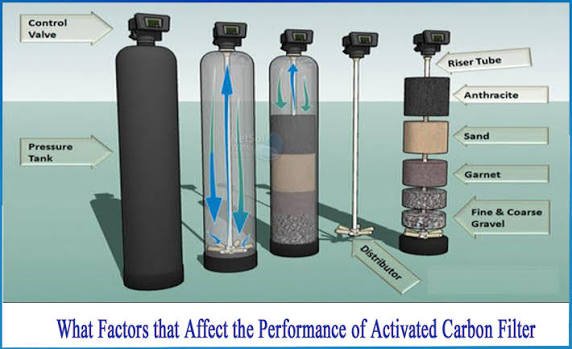
Activated Carbon vs. Other Filtration Methods
Carbon filtration is rarely the entire solution — it’s usually one piece of a larger system.
Method Removes Limitation
- Activated Carbon water filter Chlorine, chloramine (catalytic), VOCs, odor It can’t get rid of minerals, many heavy metals, or microbes
- UV Purification Protozoa, bacteria, viruses Chemicals do not affect taste.
- Reverse Osmosis The majority of dissolved solids contain heavy metals, which include numerous The water utilized to flush vital minerals, as well.
- Ion Exchange (Softener) Magnesium as well as calcium (hardness) It has no impact on flavor, chlorine, or organic compounds.
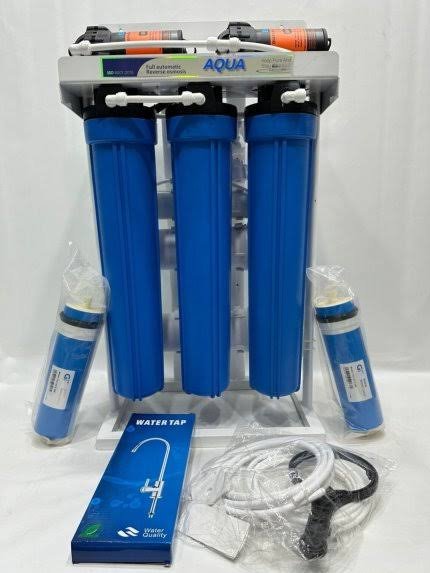
- In the real world most home systems blend activated carbon water filter with reverse osmosis carbon helps protect RO membranes activated carbon water filter membrane from the effects of chlorine while RO takes care of what carbon cannot handle, such as dissolved salts and the majority of heavy metals. If you’re using groundwater, the carbon process is usually coupled with UV disinfection, instead of being used by itself.
Choosing the Right Format for Your Situation
The right format depends less on brand and more on your living situation and activated carbon water filter demand.
- Pitchers need no installation and are ideal for renters or small households, but they’re slow and need monthly cartridge changes.
- Faucet-mount activated carbon water filter attach directly to your tap with minimal setup and moderate flow.
- Under-sink systems require a plumbing connection but offer faster flow and cartridges that typically last 6–12 months.
- Whole-house systems treat every tap in the home, including showers and laundry, and are best installed by a professional.
A single-person apartment and a family of five have very different needs here — a pitcher that’s fine for one person becomes a daily bottleneck for a larger household, which is often when people quietly stop using their activated carbon water filter altogether.
What It Actually Costs?
Upfront price is only part of the picture — cartridge cost over time usually matters more.
Format Unit Cost Replacement Cost Install
Pitcher $20–$50 $5–$10 None
Faucet Mount $20 to $40 $15-20 Fehling, 20-10-20 (excluding mounting hardware ) Bidet or sink mount $20 – 45, 10-20 (20 not available ), or No mount on mount) may cost between $20-$45 (10-$20 None for undersink, under-sink or plumbing diy 880 to 300 2060- 60 plomberie Whole House $200-1K 150$ Professional installation may be suggested (Pricing ranges reflect market conditions and can vary depending on the retailer, brand, and location. )
A good way to measure the cost per gallon. You can divide the price of a cartridge by the capacity of its rated gallons. A higher-end cartridge that lasts twice as long could be cheaper over the course of an entire year than a less expensive one that you have to replace regularly.
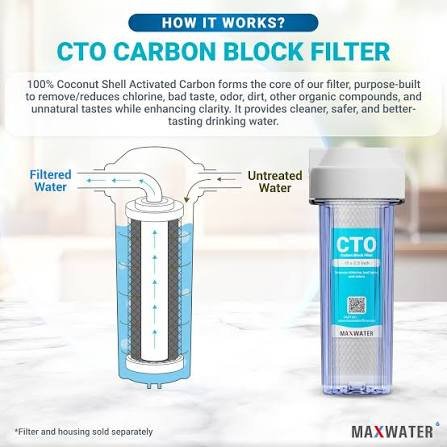
A Simple Decision Framework
- Check your municipal water quality report, or get well activated carbon water filter tested, before choosing anything.
- Identify your actual concern — taste and chlorine, or something more specific like lead or hardness.
- Match certification to that concern. Don’t assume — check the standard number.
- Choose a format that fits your household size and how much effort you’ll realistically put into maintenance.
- The price of a cartridge depends on the duration of a year, not only the cost that appears printed on the packaging.
Common Mistakes to Avoid
The use of a activated carbon water filter that exceeds the limits of the rating may result in the release of contaminants and the expansion of bacteria.
- Assuming any activated carbon water filter removes lead or bacteria without checking certification
- Relying on carbon alone for well water without addressing microbial risk separately
- Buying a whole-house system without checking local plumbing requirements, which can vary by jurisdiction — a licensed local water treatment professional can confirm what’s required in your area.
FAQs
Can activated carbon take lead out of water?
Only if it’s certified by NSF/ANSI Standard 53 that addresses lead removal. Activated carbon water filter that isn’t backed by this certification isn’t able to effectively remove lead.
What is the duration your carbon activated filters last?
It depends on the kind of filter being used. The pitcher filter typically requires maintenance each month, while sub-sink and whole-house systems can last between 6 and 12 months, depending on the quantity of water utilized and the quality of the water.
Is drinking water filtered with activated carbon drinkable all day long?
Yes, for normal municipal water, where the primary issue is the chlorine odor and taste. It’s not a replacement for Microbial treatment for untested well water.
Can activated carbon take out chlorine and chloramine?
Standard GAC is significantly less efficient against chloramine. Catalytic activated Carbon has been specifically developed to handle chloramine with more efficiency.
Do you have the capacity to wash and reuse carbon cartridges?
Generally, no. If the carbon’s pores are filled with water and its capacity for absorption is exhausted, the carbon is unable to regenerate itself through washing or cleaning in a home environment.
What is the reason why a brand new carbon filter occasionally makes a sour or unpleasant smell initially?
It is typically the result of residual carbon dust, or even fine particulate matter from manufacturing. The majority of manufacturers suggest flushing the cartridge some time prior to regular usage to remove this.
What is the difference between GAC and carbon block filtering?
GAC uses loose granules with faster flow but slightly less consistent contact with the water. Carbon block is a compressed solid that offers more thorough filtration and can capture finer particles, at the cost of a slower flow rate.
Do I need reverse osmosis in addition to a carbon filter?
It depends on what’s in your water. If your only concern is chlorine taste, carbon alone is usually enough. If you need to deal with dissolved salts, then most heavy metals, as well as nitrates, when combined with reverse osmosis, is the best solution.
Conclusion
Activated carbon water filter is among of the most effective methods to significantly improve the way your water smells and tastes as well as it can do an excellent job of chlorine and chloramine (with proper media) organic compounds, as well as chloramine. However, it isn’t without its limitations. It won’t make water soft and will not remove the majority of heavy metals and fluoride. It not an effective microbial shield on its own.
The filters that actually solve someone’s problem are the ones chosen after checking what’s really in the water, matching that to the right certification, and picking a format that fits how the household actually uses water day to day. Get those three things right, and an activated carbon filter — alone or paired with RO, a softener, or UV — becomes a genuinely reliable part of a home’s water setup rather than an expensive guess.
These information about Projector Mount are gathered from different surveys, medical tests and tech giants like Techradar and more. Our top priority is to provide you valuable information.
For More Details About Different water filter Click Here