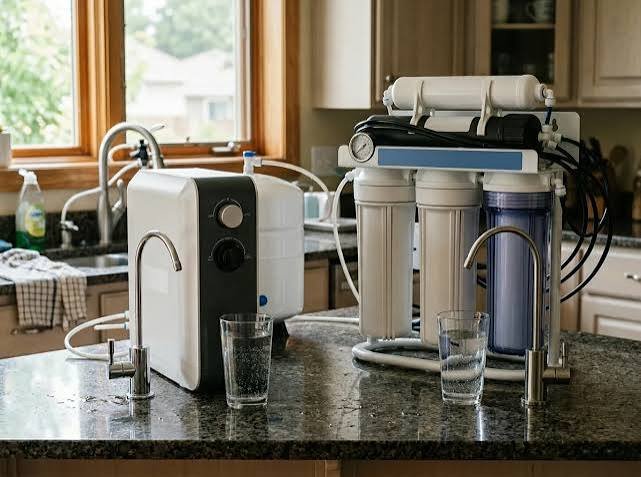
If you’ve been studying water filters recently, chances are you’ve encountered Aquatru water filter. It’s in almost each “best reverse osmosis system” review, typically at the top of the list, and the reason is that Aquatru water filter is one of the very few countertop purifiers that are independently certified, not only “lab tested” — to cut down on a lengthy list of pollutants.
But it’s only one part of the tale. Before you invest $375- $500 for one of these models, it is important to know what it eliminates, what model is best suited to your family’s needs, how much it will cost to run and, just as important, what those who own one think of living daily. This last aspect is often left out in many reviews. This isn’t one of them.
What Is AquaTru, Exactly?
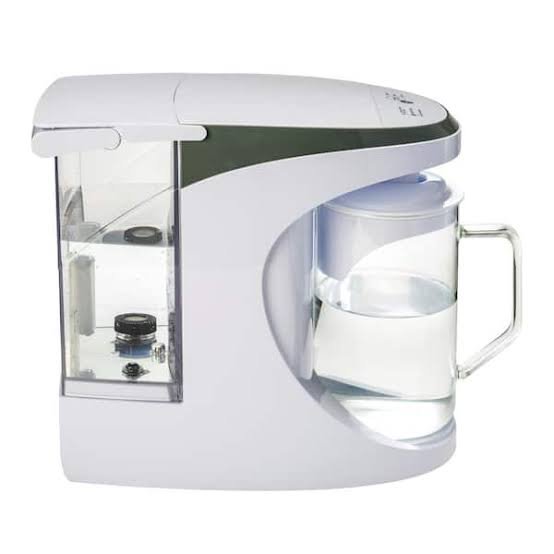
Aquatru water filter is a type of reverse Osmosis (RO) filter designed for drinking water that is built around one idea: to provide users with full RO-level filtration without plumbing.Fill a tank using tap water. You hit the button, then an in-built pump carries the water through four stages of filtration before it is able to collect pure water in the form of a glass or glass carafe.
This is the main pitch that’s being made, and it’s a valid one. The traditional Under-sink RO units have, for years, offered the most complete filtering at home; however, they require drilling or a dedicated line and, often, a professional installation, which is a major disadvantage for renters and anyone who isn’t willing to work on their plumbing. Aquatru water filter countertop models sidestep that entirely.
The company is controlled by Ideal Living, and its products are endorsed by IAPMO against various NSF/ANSI standards – specifically 42 53, 58, and 401. Some products and laboratories of third party reference the particular PFAS P473 protocol. The certification details are more important than it seems it ought to, since the majority of countertop filters claim that they remove contaminants, but never submit tests by an independent lab against a specified standard.
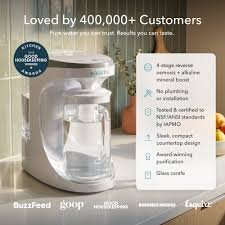
How the 5-Stage Filtration Actually Works?
AquaTru’s process is straightforward once you break it into stages:
- First Stage – Sediment prefilter: It removes larger particles such as sediment and rust prior to them getting to the finer stages of filtration.
- Stage 2 Carbon prefilter: Reduces chloramines and chlorine, which is also the area where a large portion of “tap water taste” gets removed.
- 3. Reverse Osmosis Membrane This is where the real work takes place. Water is pulled through a semi-permeable barrier which has enough thickness to allow the release of the solids which are dissolved in it, along with heavy metals such as arsenic, fluoride and PFAS.
- Step 4: carbon polish The last step is focused on VOCs, also known as volatile organic compounds (VOCs) and removes any taste that may remain after the water can get to the glass.
- Because this is a batch process that is driven by pumps rather than an on-demand tap, filling up a full tank usually falls within the 10-minute limit according to the model. This is a major difference from an under-sink piping-in RO system that provides constant water flow right from the time you turn on the faucet. If your family uses a lot of water often in a row, this is a factor to think about before purchasing.
What Contaminants Does AquaTru Water Filter Actually Remove?
Depending on the source you choose, you’ll see Aquatru water filter contaminant count listed as 82, 83, or 8. The numbers can change a bit due to certification lists change and retailers may use different variants of this specification sheet however, the underlying principle of the claims are identical for the three providers: Aquatru water filter is certified to reduce a variety of pollutants, including:
- Copper, lead, arsenic Chrmium-6, arsenic, and other heavy metals
- Fluoride and Nitrates
- Chloramines, as well as disinfection products such as trihalomethanes
- PFOA as well as PFOS (“forever chemical”)
- Microplastics
- A huge list of herbicides, pesticides, and industrial VOCs
- Pharmaceutical trace elements like carbamazepine and ibuprofen
For comparison, a standard carbon pitcher filter — a Brita or PUR, for instance — mainly addresses chlorine taste and a narrow slice of that list. RO physically forces water through a membrane, which is a fundamentally different (and more thorough) mechanism than carbon filtration alone. That’s the real distinction buyers are usually trying to understand when they search for “is AquaTru worth it.”
AquaTru Water Filter Models Compared
AquaTru water filter current lineup covers four main products, each aimed at a different household situation.
Model Format Starting Price Best For
- AquaTru Carafe Countertop, glass carafe ~$375 1–3 people, small kitchens
- AquaTru Classic Countertop, tank + dispenser ~$475 Families, higher daily usage
- AquaTru Under Sink Concealed, faucet-fed ~$395 4+ people, continuous demand
- AquaTru Shower Showerhead filter ~$149 Reducing chlorine exposure while bathing
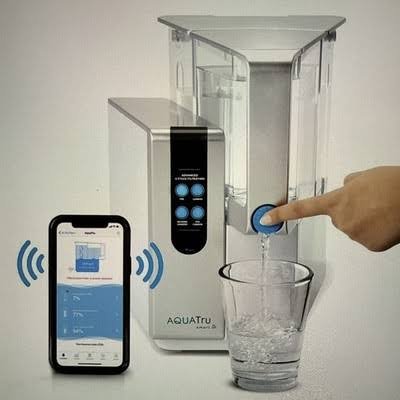
There are also Alkaline (adds remineralization) and Smart/Connect (adds Wi-Fi tracking) variants that typically add $25–$75 on top of the base price. Prices shift with promotions fairly often, so treat these as ballpark figures and check current pricing before buying.
If you’re torn between Carafe and Classic specifically, the honest answer is that the filtration is identical — the difference is tank size and daily capacity, not water quality. Buy based on how many people are drinking from it, not which one sounds more premium.
What AquaTru Really Costs Over Time?
The price of the sticker is just one element in the overall equation. Filters need replacing on a rolling schedule:
- Pre-carbon filters: roughly every 6 months
- RO membrane: up to 2 years (the longest-lasting stage)
- VOC/post-carbon filter: typically 6–12 months
Blended out, most owners land somewhere in the $100–$150/year range for filters, though this varies by model and usage. Compare that to a household that regularly buys bottled water — which can easily run several hundred dollars a year — and the payback period starts to make sense fairly quickly for heavy water drinkers. If your main complaint about tap water is just taste, though, a $30 pitcher filter will solve that specific problem far more cheaply, and RO is arguably overkill.
Where AquaTru Water Filter Falls Short: The Part Most Reviews Skip?
Most AquaTru reviews you’ll find are lab-focused: efficiency ratios, Tap Score results, timed fill tests. That data is genuinely useful, and AquaTru tends to perform well on it. But if you look past the lab numbers into actual owner feedback on Trustpilot, the Better Business Bureau, and consumer complaint sites, a different pattern shows up.
Recurring complaints include:
- Leaking units — one of the most frequently mentioned issues, sometimes appearing shortly after purchase, sometimes after a filter change.
- Units becoming noisy over time, or motors failing after months of use.
- Slow or unhelpful customer support, with some customers describing long wait times and difficulty getting a resolution or refund
- Restocking and return friction. Many reviewers have noted that returning items isn’t as easy as the guarantee of 30 days suggests.
This doesn’t mean AquaTru water filter is a poor product -many long-term owners say they have enjoyed years of hassle-free usage, and the filtration efficiency is not often questioned, even by reviewers who are unhappy with the product. However, the reviews are mixed, with aggregate review scores typically falling in the 2.4-3.0 out of five range. If support and reliability matter as much as the filtration efficiency, it’s important to consider before you invest the $400 or more to buy a device.
AquaTru vs. the Alternatives
- AquaTru water filter isn’t the sole certified RO option available, and it’s worthwhile to understand how it compares to the other options:
- AquaTru water filter in comparison to Berkey: Berkey is a gravity-fed water purifier that’s not technically reverse Osmosis; some users find its lack of electric requirements or a pump preferable; however, its certification to reduce contaminants such as fluoride and heavy metals falls short of AquaTru’s RO process.
- AquaTru in comparison to. Waterdrop/ RKIN: Both are modern countertop RO rivals with their own certifications, and in certain cases, additional features like hot-and-cold dispensing and UV sterilization. Both are worth considering for features that aren’t filtered to you; however, AquaTru has a distinct advantage in terms of certification breadth (multiple NSF/ANSI standards instead of only one or two).
- AquaTru water filter is different from traditional RO. Traditional RO with an under-sink: A plumbed system provides water at the moment it is needed and doesn’t need refilling by hand; however, it requires installation and generally uses more water per gallon. produced.
- AquaTru trades that convenience for a plug-and-play setup.
Who Should Buy AquaTru Water Filter — and Who Shouldn’t?
It’s a strong fit if you:
- Currently buy bottled water regularly and want to stop
- Have a aquatru water filter report showing lead, PFAS, arsenic, or similar contaminants
- Rent, or otherwise can’t modify plumbing
- Want independently certified performance, not just marketing claims
Consider skipping it if you:
- Need continuous, on-demand water flow rather than a 10–16 minute batch cycle.
- Only care about chlorine taste, not deeper contaminants — a basic pitcher aquatru water filter is cheaper and sufficient.
- Particularly sensitive to product issues with reliability and could be disappointed by a leak or slow support ticket
- Are you looking for water with a minerals that are natural? You don’t need to buy an additional remineralization system as RO removes minerals as well as the other contaminants.
Setting Up an AquaTru: What to Expect
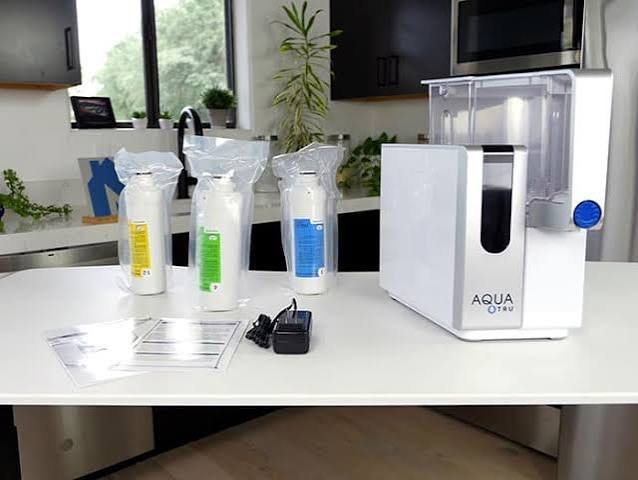
For the countertop models, setup is genuinely simple: unbox, rinse the tanks, fill the reservoir, run the initial flush cycles the manual recommends, and you’re purifying water within about 10–15 minutes—no tools required.
The Under Sink model is a different story — it connects to your cold water line and usually requires a small hole for its dedicated faucet. Most people with basic DIY comfort can handle it themselves in under an hour, but hiring a plumber removes any guesswork, especially in older homes.
One tip worth following regardless of model: don’t skip the initial flush cycles. New aquatru water filters can release trace carbon fines or produce an odd taste in the very first batch or two, and running the recommended flush clears that up before you start drinking from it.
Availability by Region
AquaTru water filter offers direct sales within the US through aquatru.com and has a separate AquaTru water filter Europe distributor who serves European customers. If you’re outside of the US, it’s important to know which company you’re buying from, as warranty terms, customer support, and delivery times differ between the two.
FAQs
Is AquaTru Water Filter worth the money?
If you’re in a household that buys regular bottles of water, or have discovered contaminants like lead and PFAS that are present within your drinking water supply, most people believe it is worth the cost in the long term. If all you face is the chlorine taste or smell or odor, a cheaper filter should suffice.
Does AquaTru Water Filter remove fluoride and PFAS?
Yes. Fluoride, PFOA, and PFOS reduction are part of AquaTru’s certified contaminant list through the reverse osmosis stage
Do AquaTru Water Filter Purifiers NSF certified?
AquaTru water filter purifiers have been endorsed by IAPMO in accordance with NSF/ANSI standards 42 and 53, and 401; there are models that employ P473 protocol specifically. P473 Protocol specifically.
Does AquaTru Water Filter require plumbing?
Not for the Carafe or Classic countertop models — you fill them manually. It is important to note that the Under Sink model does require plumbing connections.
How often should you upgrade AquaTru filtering systems?
Pre-carbon filters last around six months, the RO membrane can last up to two years, and the post-carbon VOC filter usually falls somewhere in between, based on usage.
What is the reason my AquaTru is leaking?
Leaking is one of the more commonly reported issues among owners, sometimes tied to tank seating or filter installation. AquaTru’s customer support can usually troubleshoot it, though response times have been a recurring complaint in owner reviews.
Is AquaTru customer service reliable?
Feedback here is mixed. Customers have had rapid and prompt resolutions; however, others have complained of lengthy delays and difficulties receiving replacements or refunds. This is an important issue to be considered, and it’s not only a matter of occurrence.
How much water does AquaTru waste?
RO systems inherently produce some reject water. The efficiency ratio of AquaTru is usually considered to be higher than older-generation RO systems, but specific figures may differ slightly depending on the model and the source.
Conclusion
AquaTru has earned its name for a reason: AquaTru is one of the very few countertop water filters that can back its claims about removing contaminants with real independent certifications, and the performance of the filter itself is able to stand up to tests in the lab. If you’re looking for RO-level purification without plumbing modifications, it’s difficult to find a more reliable alternative.
That said, don’t buy it purely on lab scores. Read the owner reviews, understand the leaking and customer-service complaints that show up often enough to matter, and decide whether that trade-off is acceptable for the level of filtration you’re getting. For most households replacing bottled water or dealing with a real contaminant concern, it still comes out as a reasonable investment — just go in with eyes open on both sides of the picture.
These information about Projector Mount are gathered from different surveys, medical tests and tech giants like Techradar and more. Our top priority is to provide you valuable information.
For More Details About Different Water Filter Click Here