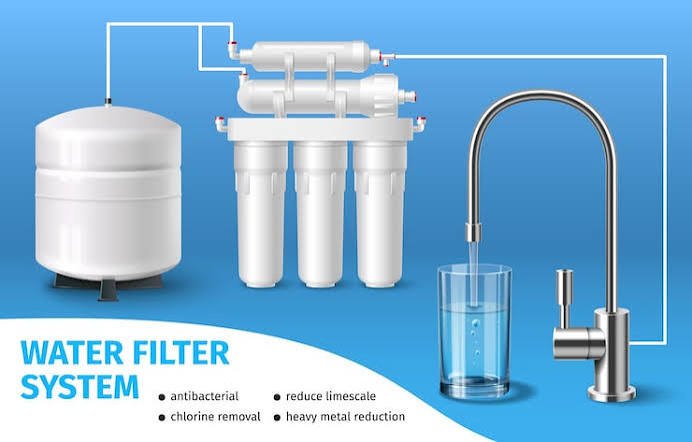
The best water filtration system for well water is the one built around your lab results. Most wells end up with some combination of a sediment filter, an iron or sulfur filter, a softener, carbon, and UV disinfection. Which of those you actually need depends on what your water contains.
If you get your water filtration system for well water from a private well, no utility is testing it for you. About one in eight U.S. households relies on a private well, and federal drinking water rules do not cover them. The EPA and CDC both recommend testing every year and inspecting the well itself once a year.
That puts the decision in your hands. This guide walks through what to test, which problems call for which equipment, how the pieces fit together, what it costs, and when to call a professional.
How Water Filtration System For Well Water Differs From City Water?
City water comes from a regulated supply water filtration system for well water that is tested, treated, and usually carries a disinfectant such as chlorine. A private well has none of that built in. Your water comes straight from groundwater, so it reflects the rock, soil, and land use around your property.
That is why two neighbors can have completely different problems. One has orange iron stains, the other has clear water with elevated nitrate.
- Natural sources: iron, manganese, hardness minerals, arsenic, uranium, radon, and fluoride dissolve from geology.
- Land use: nitrate and pesticides can come from farming, lawns, and nearby septic systems.
- Wellhead condition: a cracked casing, loose cap, or flood can let bacteria in.
- No residual disinfectant: nothing protects the water once it enters your pipes.
The practical takeaway: a generic cartridge filter from a hardware store won’t reliably solve a well problem. Treatment has to match the contaminant.
Test First: What to Check Before You Buy Anything
Testing is the cheapest way to avoid an expensive mistake. Skip it and you may pay for a system that does nothing for your actual problem.
The baseline panel
Most wells should be checked every year for:
- Total coliform bacteria and E. coli
- Nitrate (and nitrite)
- pH
- Total dissolved solids (TDS) and hardness
Add iron, manganese, and hydrogen sulfide if you notice staining or odor. Test for arsenic at least once, because it has no taste or smell. Depending on where you live, uranium, radon, fluoride, and PFAS may also be worth checking.
How to collect a sample properly?
Sampling mistakes cause false results more often than people expect. Wisconsin’s Department of Natural Resources notes that water filtration system for well water owners frequently get false positives from poor collection or from samples that miss the lab’s roughly 48-hour window for bacteria.
- Use a certified drinking water laboratory, or your local health department’s kit.
- Use the sterile bottle supplied and don’t touch the inside of the cap.
- Run the cold tap for a few minutes, then fill from a non-swivel tap before any treatment equipment.
- Return the sample to the lab immediately.
When to test more often water filtration system for well water?
Test sooner if anyone in the house is pregnant, if you prepare infant formula with the water filtration system for well water, after flooding, after any well or plumbing repair, or if the taste, smell, or color changes. A neighbor’s bad result is also a good reason to test.
Two results that need immediate action
- Bacteria present: stop drinking the water untreated and find the source. Bacteria indicate that disease-causing organisms may be present.
- Nitrate above 10 mg/L: pregnant people should avoid the water, and it should not be given to infants under six months or used for formula.
Common water filtration system for well water Problems and the Right Fix
This table is the core of the decision. Find your lab result or symptom, then match the treatment.
| Problem | What you notice | Typical solution |
| Sediment, sand, silt | Cloudy water, clogged fixtures | Spin-down filter, sediment cartridge, backwashing filter |
| Iron | Orange or rust stains, metallic taste | Oxidizing filter (air injection, Katalox Light, greensand, Birm) or ozone |
| Manganese | Black or brown stains | Oxidizing media, often paired with the iron filter |
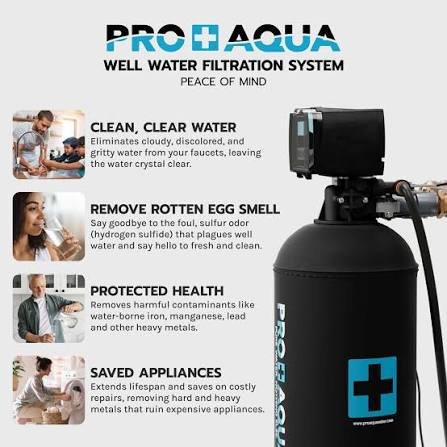
| Hydrogen sulfide | Rotten-egg smell | Air injection, catalytic carbon, ozone, or chlorination with carbon |
| Hardness | Scale, spotty dishes, dry skin | Salt-based softener or scale-control system |
| Low pH (acidic) | Blue-green stains, pinhole copper leaks | Acid neutralizer (calcite or corosex) |
| Bacteria | Often no sign | UV disinfection, chlorination, or ozone, plus source repair |
| Nitrate | No sign | Reverse osmosis or anion exchange at the drinking tap |
| Arsenic | No sign | Specialized adsorptive media or reverse osmosis at the drinking tap |
| Tannins | Yellow or brown tint | Tannin-specific resin or carbon |
| Taste, odor, organic chemicals | Off flavors | Granular activated carbon (GAC) or catalytic carbon |
| PFAS, radon, VOCs | No sign | Certified carbon, ion exchange, aeration, or RO, matched to the lab result |
A few of these deserve a closer look.
Does UV remove iron?
No. UV only inactivates microorganisms. Iron and cloudiness actually shield bacteria from the light, which is why a water filtration system for well water matters.
Does carbon kill bacteria?
No. Carbon improves taste and removes many organic chemicals, but it is not a disinfectant.
Can a softener remove iron?
Only small amounts. Heavy iron fouls softener resin, so a dedicated iron water filtration system for well water goes first.
Types of Water Filtration Sysrem For Well Water Treatment Systems
Treatment falls into two broad categories. Point-of-entry water filtration system for well water treat all the water entering the house. Point-of-use (POU) units, like an under-sink reverse osmosis filter, treat a single tap.
Sediment filters
The first line of defense. A spin-down water filtration system for well water catches coarse sand, and cartridges in the 5 to 50 micron range catch finer particles. They protect everything downstream.
Iron and sulfur filters
These convert dissolved iron, manganese, and sulfur into particles that are backwashed away. Air injection oxidizers and media like Katalox Light and greensand are common water filtration system for well water in homes with moderate to heavy iron.
Water softeners
Salt-based ion exchange swaps hardness minerals for sodium or potassium. A common rule of thumb is that water filtration system for well water above about 7 grains per gallon is hard enough to scale pipes, heaters, and shower heads regardless of sediment filtration.
If someone in the home is on a sodium-restricted diet, ask about potassium chloride regeneration or keep a separate drinking-water tap.
Carbon filters
GAC and catalytic carbon improve taste and odor and reduce many chemicals. Catalytic carbon handles hydrogen sulfide and chloramine better than standard carbon.
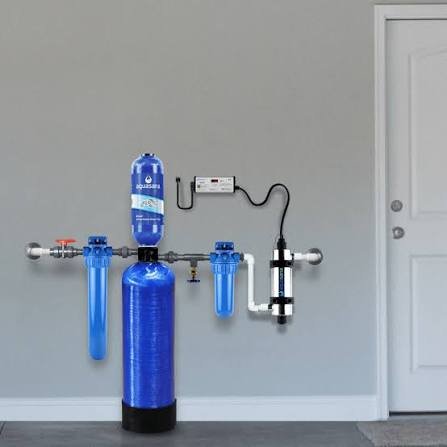
UV disinfection
A UV system uses ultraviolet light to inactivate bacteria, viruses, and cysts without adding chemicals. It needs clear, low-iron water and a power supply, and it leaves no residual disinfectant in the pipes.
Chlorination
A feed pump injects chlorine, followed by a contact tank and a carbon water filtration system for well water. It is strong against bacteria, sulfur, and heavy iron, but needs more attention than UV.
Reverse osmosis
Usually installed under the kitchen sink for drinking and cooking. RO reduces nitrate, arsenic, and dissolved solids, but it is slow and produces wastewater, so it is rarely used for the whole house.
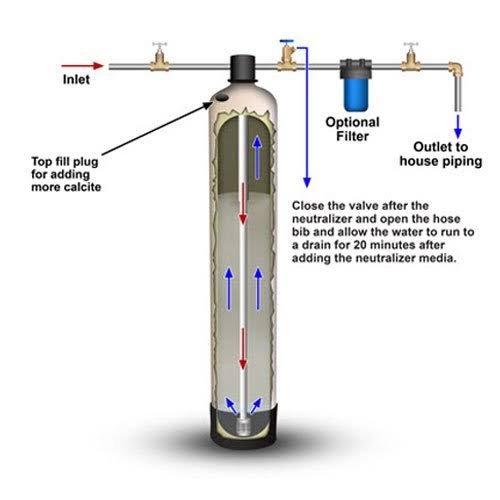
Acid neutralizers
Calcite or corosex media raise pH and protect copper plumbing from corrosion.
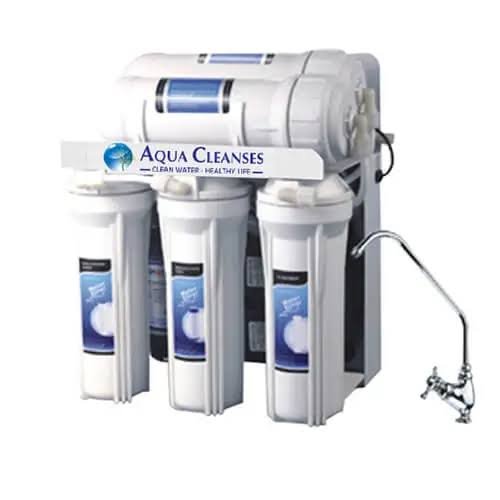
The Right Order: How a Multi-Stage Water Filtration System For Well Water Fits Together?
Order is where many installations go wrong. Each stage protects the next, so a sensible water filtration system for well water layout looks like this:
- Well pump and pressure tank
- Sediment pre-filter, to remove particles
- Iron and sulfur treatment, to oxidize and water filtration system for well water out metals and gas
- Water softener, if hardness is high
- Carbon filter, water filtration system for well water to polish taste and odor
- UV disinfection, as the final safeguard
- Reverse osmosis at the kitchen tap, if nitrate, arsenic, or similar issues are present
The logic is simple. UV needs clear water, softeners need iron removed first, and carbon clogs if particles reach it.
Install a bypass valve around every major component so you can service one stage without shutting off the whole house.
Sizing and Pressure: The Detail Most Guides Skip
Every filtration stage creates resistance. If your system is undersized or your pump is weak, you will notice it in the shower.
Size equipment to your household’s peak demand in gallons per minute (GPM), not to the number of people alone. Add up what runs at once: showers, a dishwasher, a washing machine, and an outdoor tap.
Also confirm that your well pump and pressure tank can maintain adequate pressure through every stage, especially once you add UV and a softener in series. Backwashing water filtration system for well water need enough flow to clean themselves properly.
Low-pressure and off-grid properties, such as cabins and remote farms, may need a different water filtration system for well water layout. Options include gravity-fed filters, solar-powered pumps, or fewer in-line stages with treatment concentrated at the drinking tap.
Decision Guide: Which Setup Fits Your Situation?
- Clear water, but a positive bacteria test. Inspect the well cap and casing, shock-chlorinate if advised, then install a sediment pre-filter and UV.
- Orange stains and scale. An iron filter first, then a softener.
- Rotten-egg smell. First check whether the smell is from the water filtration system for well water or your water heater. If it is the well, use air injection, catalytic carbon, ozone, or chlorination with carbon.
- High nitrate or arsenic. Reverse osmosis at the kitchen tap for drinking and cooking, and work on the source of contamination.
- Everything is within limits, but the water tastes off. A carbon filter is usually enough.
- Everything tests clean. Keep testing annually. As one water filtration system for well water specialist quoted in a consumer guide put it, the cheapest treatment may be to do nothing after testing, though a basic sediment filter is cheap protection for your plumbing.
For farms, rentals, and small businesses
Commercial and agricultural properties follow the same logic but with higher stakes. Livestock, food service, and rental housing carry added liability, so annual bacteria and nitrate testing should be documented.
Sizing matters more water filtration system for well water, because peak demand is higher and downtime is costly. Ask installers for flow calculations, a maintenance plan, and response times, and check whether local health regulations apply to your operation.
What It Costs?
Prices vary widely by region, brand, water chemistry, and labor rates, so treat these as rough planning ranges in U.S. dollars and confirm them with local quotes.
| Component | Typical equipment | Typical installed |
| Sediment filter | $50 to $400 | $200 to $800 |
| Iron and sulfur filter | $600 to $3,000 | $1,200 to $4,500 |
| Water softener | $500 to $2,500 | $1,000 to $3,500 |
| Whole-house carbon filter | $400 to $2,000 | $800 to $3,000 |
| UV disinfection | $300 to $1,500 | $600 to $2,500 |
| Acid neutralizer | $500 to $1,800 | $900 to $2,800 |
| Under-sink reverse osmosis | $150 to $600 | $250 to $900 |
A complete multi-stage water filtration system for well water setup commonly lands in the low-to-mid thousands installed, and can run higher for heavy contamination or large properties.
The ongoing costs people forget
The purchase price is only part of the picture. Budget for:
- Sediment cartridges, replaced several times a year in dirty water
- Softener salt or potassium
- Carbon or filter media replacement every few years
- A new UV lamp roughly every year
- RO filters and membranes
- Water and power used by backwashing
- Annual lab testing
Outside the U.S., import duties, local labor, and parts availability can shift these numbers significantly, so compare quotes locally.
DIY or Professional Installation?
Simple jobs, such as a sediment water filtration system for well water or an under-sink RO unit, are realistic for a confident DIYer with a bypass plan.
Hire a professional for multi-stage water filtration system for well water, chemical feed or ozone, drain and electrical work, and any bacteria problem that requires well disinfection. Local plumbing codes and permits may also apply.
A typical professional install follows these steps:
- Shut off power and relieve pressure.
- Locate equipment after the pressure tank and before the water heater.
- Install bypass valves and mount the filter housings and tanks in order.
- Connect drain lines with a proper air gap for backwashing units.
- Place UV downstream of filtration, with room to service the lamp.
- Restore power, flush the system, and retest the water.
Maintenance That Keeps the System Working
Treatment equipment only protects you while it is maintained. An exhausted carbon bed or an old UV lamp gives false confidence.
- Monthly: check gauges and look for leaks.
- Every one to three months: change sediment cartridges and top up salt.
- Every year: replace the UV lamp, clean the quartz sleeve, and retest for bacteria and nitrate.
- Every few years: run a broader panel and service media tanks.
- After a flood, repair, or new well: test immediately, and disinfect the well if needed.
Keep a simple log of test dates, filter changes, and pressure readings. Changes in the numbers often flag a problem before you can taste it.
Mistakes That Cost Well Owners Money
- Buying equipment before getting a lab test
- Putting UV on cloudy or iron-heavy water
- Ignoring pump flow and pressure when choosing a system
- Skipping bypass valves
- Assuming a carbon filter or pitcher makes untreated well water safe
- Treating symptoms while a cracked well cap or nearby septic issue goes unfixed
- Forgetting to retest after installation
On pitchers: a Brita-style filter improves taste, but it is not designed to disinfect water filtration system for well water or remove nitrate and arsenic.
Finding a Qualified Installer
When you search for water filtration system for well water treatment near you, expect to see national dealers, independent water treatment companies, well and pump contractors, and plumbers who specialize in treatment.
Before you hire anyone:
- Insist on a certified laboratory test first. Be cautious of free in-home tests that lead straight to a sales pitch, and get a second opinion from a certified lab.
- Check licensing, insurance, and membership in a recognized trade body such as the Water Quality Association, or your local equivalent.
- Get at least three itemized written quotes.
- Ask about warranty, service plans, and response times.
- Confirm they serve your area and handle your type of property.
Look for equipment certified to recognized standards, such as NSF/ANSI 42 and 53 for filters, 44 for softeners, 55 for UV, and 58 for reverse osmosis.
Standards Vary by Country
The EPA’s maximum contaminant levels and NSF/ANSI certifications are the common reference in the United States. Elsewhere, the guidance changes.
WHO drinking water guidelines are widely used as a benchmark. Canada follows Health Canada guidelines, the EU relies on the Drinking Water Directive, and Australia uses the Australian Drinking Water Guidelines.
Regional geology matters too. Arsenic and fluoride are major concerns in parts of South Asia, bedrock regions often see radon and uranium, and coastal or low-lying areas often deal with sulfur, iron, and tannins. Always rely on a local test and your local health authority’s advice.
Frequently Asked Questions
What is the best water filtration system for well water?
There isn’t one best system. The right setup matches your lab results. Many homes combine a sediment filter, an iron and sulfur filter, a softener, carbon, and UV disinfection.
Do I need a water softener with well water?
Only if your water is hard, roughly above 7 grains per gallon. Hardness isn’t a health risk, but scale damages appliances and plumbing. If you have iron too, treat the iron first.
How do I remove iron from water filtration system for well water?
Use an oxidizing iron filter such as air injection, Katalox Light, or greensand. Light iron may be handled by a softener, but heavy iron needs a dedicated filter.
How can I get rid of the rotten-egg smell?
Confirm the source first, because a water heater can cause the same smell. For well-sourced sulfur, options include air injection, catalytic carbon, ozone, and chlorination with a carbon filter.
Can a filter remove bacteria from well water?
Standard sediment and carbon filters do not reliably remove bacteria. UV, chlorination, or ozone is used for disinfection. Fix the contamination source as well.
How often should I test my well?
At least once a year for coliform bacteria, nitrate, pH, and TDS. Test arsenic at least once, and retest after floods, repairs, or any change in taste, smell, or color.
Is water filtration system for well water safe to drink without treatment?
Not automatically. Clear, good-tasting water can still carry bacteria, nitrate, or arsenic. Testing is the only way to know.
How much does a water filtration system for well water cost?
Simple setups start in the hundreds of dollars. A full multi-stage whole-house system typically costs several thousand dollars installed. Get local quotes after a lab test.
Will a whole-house system reduce my water pressure?
It can if it is undersized or clogged. Correct sizing, the right micron rating, and timely maintenance prevent most pressure drops.
Does a softener or RO system make water filtration system for well water safe for babies?
Not on its own. If nitrate is elevated, avoid using the water for infant formula and follow your health authority’s advice. RO at the drinking tap can reduce nitrate, but verify with a follow-up test.
Conclusion
A water filtration system for well water works best when it is built from your own test results rather than a sales brochure. Test first, treat health risks before cosmetic ones, and install equipment in the right order.
Your next steps:
- Order a certified lab test covering bacteria, nitrate, pH, hardness, iron, and arsenic.
- Check the wellhead for cracks, loose caps, and nearby contamination sources.
- Use the problem table to shortlist treatment for each result.
- Size equipment to your flow rate and pump, and get three itemized quotes.
- Install with bypass valves, retest, and set a yearly maintenance reminder.
If everything tests clean, keep testing every year. Clean water today doesn’t guarantee clean water after the next flood.
These information about Projector Rental are gathered from different surveys, medical tests and tech giants like Techradar and more. Our top priority is to provide you valuable information.
For More Details About Different Water Filters Click Here