Water Filtration Service: A Practical Guide for Homes and Businesses
Most people start looking for a water filtration service after something goes wrong. The water tastes of chlorine, a kettle fills with scale, a lab report shows a contaminant, or a café owner realizes the espresso machine is clogging again.
This guide explains water filtration service what these services actually do, which technologies solve which problems, what you should expect to pay, and how to avoid being sold equipment you don’t need.
What Is a Water Filtration Service?
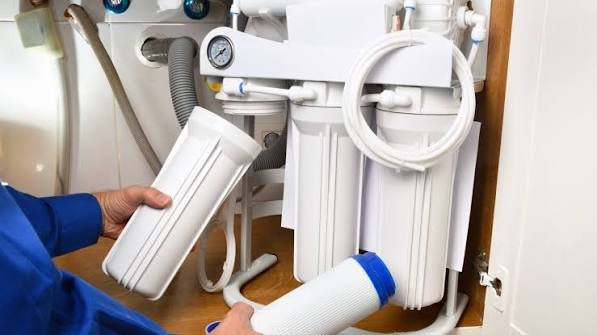
A water filtration service tests your water, recommends and installs treatment equipment, and keeps it working through scheduled filter changes and inspections. Providers are also called water treatment companies or water conditioning dealers. Some are plumbers who add filtration to their work.
A complete service usually covers:
- Water testing or review of lab results
- System design and sizing
- Installation and plumbing connections
- Filter, membrane, resin, and UV lamp replacement
- Repairs and troubleshooting
- Follow-up testing
The maintenance part matters most. A water filtration service past its change date can stop doing its job, and in some cases becomes a place for bacteria to grow.
Who Needs a Water Filtration Service, and When?
Not everyone does. A pitcher water filtration service handles chlorine taste for many households. A professional service earns its cost in specific situations:
- Private well owners. No utility tests your water, so you carry that responsibility.
- Hard water homes. Scale builds up on fixtures, water heaters, and dishwashers.
- Older properties. Lead pipes or lead solder may be present, particularly in older housing stock.
- Areas with known contaminants. Some regions have naturally occurring arsenic or fluoride in groundwater, and some have industrial PFAS.
- Businesses. Restaurants, cafés, clinics, offices, and hotels need consistent water to protect equipment and keep product quality steady.
- After a trigger. A bad test result, a utility notice, a move, or visible staining.
How a Water Filtration Service Works?
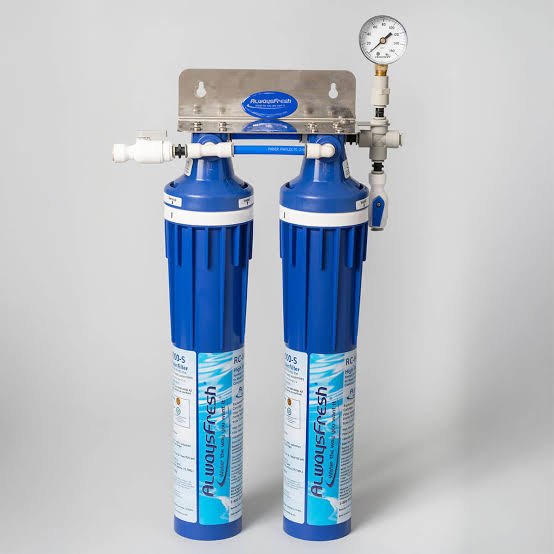
The process water filtration service is fairly standard across good providers:
- Assessment. The provider asks about your water source, symptoms, household size, or business use.
- Testing. This should be a certified lab test or your utility’s published report, not only a quick sales-visit check.
- Recommendation. Equipment is matched to the contaminants found.
- Quote. A written proposal lists models, installation scope, maintenance, and warranty.
- Installation. A licensed plumber or technician installs the system, often within a day.
- Verification. Flow, pressure, drainage, and often a post-install water test.
- Scheduled maintenance. Filters and parts are replaced on a fixed cycle.
If a provider skips step 2 and goes straight to a quote, treat that as a warning sign.
Types of Water Filtration Service
Different technologies solve different problems. No single system fixes everything.
Point-of-use systems
These treat water at one tap, usually the kitchen sink.
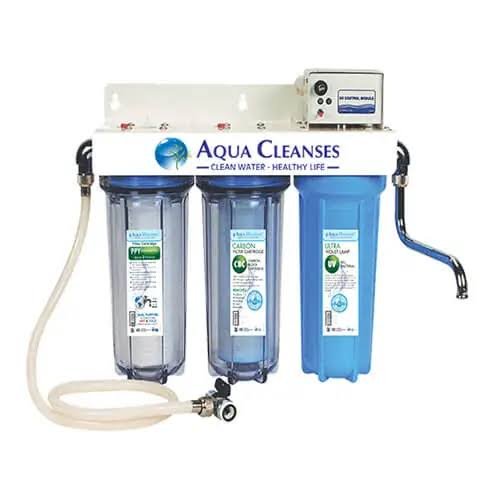
- Activated carbon: reduces chlorine, taste, odor, and some organic chemicals.
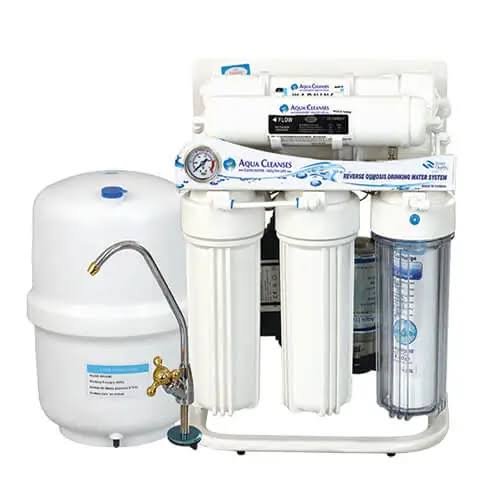
- Reverse osmosis (RO): pushes water through a membrane to reduce dissolved solids and many contaminants. It produces wastewater and usually needs a pre-filter.
- UV disinfection: inactivates microorganisms but does not remove chemicals.
Point-of-entry (whole-house) systems
These treat water where it enters the building.
- Sediment filters: capture sand, silt, and rust.
- Catalytic or granular activated carbon: reduces chlorine and chloramine for showers and laundry.
- Ion-exchange water softeners: replace hardness minerals to prevent scale.
- Iron and manganese filters: common on well water.
- Acid neutralizers: correct low pH that corrodes pipes.
Filter, softener, or RO: how they differ
| Best for | Does not do | |
|---|---|---|
| Carbon filter | Taste, odor, chlorine | Reduce hardness or dissolved salts |
| Softener | Hardness and scale | Make water safe from most contaminants |
| Reverse osmosis | Dissolved solids, many metals, certified PFAS reduction | Work well without pretreatment; save water |
| UV | Bacteria and viruses in clear water | Remove chemicals or sediment |
A common setup combines several: sediment filter, softener, and an RO unit at the kitchen tap.
Match the System to the Test Result
This is where many buyers get steered wrong. The right equipment depends on what is in your water, not on what a salesperson prefers.
Start with a water filtration service quality report. If you are on a municipal supply, your utility publishes one (in the US, the Consumer Confidence Report). If you use a well, you need a certified lab test, and it should be repeated regularly.
A free in-home test can flag hardness or total dissolved solids (TDS). It cannot detect lead, PFAS, or bacteria. Use it as a screening step, never as the basis for a major purchase.
Which certification proves what?
Look for independent certification, not marketing language such as “exceeds industry standards” with no standard named.
| Concern | Relevant standard |
|---|---|
| Taste, odor, chlorine | NSF/ANSI 42 |
| Health-related contaminants such as lead | NSF/ANSI 53 |
| Reverse osmosis systems | NSF/ANSI 58 |
| Emerging contaminants | NSF/ANSI 401 |
| UV disinfection | NSF/ANSI 55 |
| Softeners (cation exchange) | NSF/ANSI 44 |
For PFAS, confirm the product is specifically certified for PFOA and PFOS reduction. The US EPA set limits for PFOA and PFOS in drinking water in 2024, so certified claims matter. Certification bodies include NSF International, the Water Filtration service Quality Association (WQA), and IAPMO.
Buy, Rent, or Subscribe?
Ownership models change your costs far more than people expect.
| Model | How it works | Suits | Watch for |
|---|---|---|---|
| Buy | You own the system and pay for parts | Long-term homeowners | Maintenance is up to you unless you add a plan |
| Rent or lease | One monthly fee covers equipment and service | Tenants, businesses wanting predictable costs | Total cost over several years; exit fees |
| Service contract | You own it, the provider maintains it | Well owners, commercial sites | What is included and response times |
| Filter subscription | Scheduled filter deliveries | Under-sink systems | Whether replacements are properly certified |
Example:
A family on a private well with iron staining buys an iron filter and UV unit, then adds an annual contract that covers the UV lamp and a yearly water test. A small café does the opposite: it rents an RO system so repairs and membrane changes are the provider’s problem.
What Does a Water Filtration Service Cost?
Costs vary widely by country, water quality, and system type, so use any published figure as a starting point and compare itemized quotes in your area.
Rough relationships hold in most markets:
- Water testing ranges from inexpensive screening kits to comprehensive lab panels.
- Under-sink carbon or RO systems cost far less than whole-house systems.
- Commercial RO systems cost the most and scale with capacity.
- Ongoing costs include filters, salt for softeners, membranes, service visits, and RO wastewater.
What drives the price water filtration service?
- The number and type of contaminants
- Water flow needs (household size or business volume)
- Pretreatment required before RO
- Installation difficulty, drains, and electrical access
- Certification and warranty terms
- Local labor rates
- Service frequency and response-time commitments
Compare five-year cost, not just the install price. A cheap system with expensive proprietary filters often costs more over time.
Regional Differences That Change the Answer
Water is local, and so are the best solutions.
- Hard water regions are common across parts of the US, the UK, the Middle East, and South Asia. Softening or scale control is often the first request.
- Chloramine is used by many US utilities and needs catalytic carbon, since standard carbon is less effective.
- Private wells are common in rural North America, Europe, and South Asia, and require independent testing.
- Arsenic and fluoride occur naturally in groundwater in some regions and call for targeted treatment such as RO or specialized media.
- Legacy lead plumbing in older cities makes certified lead-reducing filters relevant.
- Regulation differs. The US EPA, the WHO guidelines, the UK Drinking Water Inspectorate, and national authorities each set different rules, and plumbing codes vary locally.
When searching, the phrases “water filtration service near me” and “water treatment company in [your city]” surface local providers. Terms like “water purifier service” are more common in some markets.
Water Filtration Service for Businesses
Commercial sites have different needs from homes.
Restaurants and cafés rely on clean, consistent water for coffee, ice, and cooking. Scale shortens the life of espresso machines, steamers, dishwashers, and boilers. Offices and clinics often want filtered drinking water and reliable dispensers.
Typical commercial solutions include softening and carbon pretreatment, commercial RO with a storage tank and booster pump, and sometimes antiscalant dosing for equipment protection. Ask any provider water filtration service about response time, spare parts, and what happens if the system goes down during service hours.
How to Choose a Water Filtration Service Provider?
Use this checklist before you sign anything.
- Licensed and insured to do plumbing or water treatment work in your area
- Uses or accepts a certified lab test
- Names the certification for each product recommended
- Gives a written, itemized quote with model numbers
- Explains the maintenance schedule and yearly cost up front
- Offers clear warranty terms on equipment and labor
- Has reviews on several independent platforms
- Explains what the system will not remove
Questions worth asking
- Which contaminants in my test will this reduce, and what certifies that?
- What does it cost to run for a year, including parts and wastewater?
- What if my water changes later?
- How fast do you respond to a service call?
- Can I cancel the contract, and what are the fees?
Red flags
- Fear-based claims about “toxic tap water” with no lab data
- Pressure to sign the same day
- A single test result used to justify a whole-house system
- No named standards or model numbers
- Refusing to put maintenance costs in writing
Common Mistakes to Avoid
- Buying equipment before testing the water
- Assuming a softener makes water safe to drink
- Skipping pretreatment ahead of an RO membrane, which shortens its life
- Ignoring replacement dates
- Choosing on brand alone rather than certification
- Using UV on cloudy water, which blocks the light
If a well test shows bacteria, do not rely on a filter cartridge alone. Disinfection and professional guidance come first.
Maintenance Calendar
Follow the manufacturer’s schedule, and use this as a general rhythm.
| Frequency | Task |
|---|---|
| Monthly | Check softener salt and look for leaks or pressure changes |
| Every few months | Replace sediment pre-filters as needed |
| Every 6 to 12 months | Replace carbon cartridges; sanitize RO systems where advised |
| Yearly | Replace UV lamp, retest water, inspect the full system |
| Every few years | Replace RO membrane, service control valves |
Keep a record of install and service dates. It helps with warranty claims and tells your provider what has already been done.
When Not to Buy a Full System?
You may not need a full service if:
- You only want better taste and a certified pitcher or faucet filter does the job
- Your utility’s report shows no concerns and you have no scale problems
- The issue is a corroded pipe or fixture, which plumbing repair should address first
- You are renting a home and a portable filter is more practical
Alternatives to a Full Service
- Certified pitcher, faucet-mount, or countertop filters
- DIY under-sink kits if you are comfortable with plumbing
- Reporting problems to your water utility and requesting recent test data
- Bottled or refill-station water as a short-term measure
- Replacing lead service lines or old fixtures at the source
Frequently Asked Questions
What does a water filtration service include?
Testing, system design, installation, scheduled filter and part replacement, repairs, and follow-up testing. Confirm which of these your contract covers.
How much does a water filtration service cost?
It depends on system type, water quality, and region. Under-sink units cost much less than whole-house or commercial installations. Get itemized quotes that include installation and yearly upkeep.
Is a whole-house water filtration service worth it?
It can be if problems affect showers, laundry, and appliances, or if you have sediment, chlorine, iron, or hardness throughout the home. For drinking water only, a point-of-use system is often more economical.
How often should water filtration service be changed?
It varies by filter type and water quality. Sediment and carbon cartridges are commonly changed every few months to a year, and RO membranes less often. Follow the manufacturer’s schedule.
Do I need a water filtration service test before installing a system?
Yes. Testing shows what is actually in your water so the system can be matched to it. Well owners should retest regularly.
Is reverse osmosis better than carbon filtration?
Neither wins in every case. RO reduces dissolved solids and many contaminants but wastes some water. Carbon is excellent for chlorine, taste, and odor. Many installations use both.
Can a water filtration service remove PFAS or lead?
Only with equipment certified for those contaminants, typically under NSF/ANSI 53 or 58. Check the certification for the specific substance and keep up with filter changes.
Do water softeners water filtration service?
Not in the usual sense. They reduce hardness through ion exchange. They are not designed to remove most drinking-water contaminants.
Can I install a system myself?
Point-of-use systems are often DIY-friendly. Whole-house installations involve plumbing, drains, and sometimes electrical work, so professional installation is wise and may be required to keep the warranty.
Can I cancel a service contract?
Often, but terms differ. Ask about notice periods, early-termination fees, and what happens to the equipment before you sign.
Conclusion
A good water filtration service solves a verified problem with certified equipment and stays involved through maintenance. The strongest decisions start with a proper test and end with a written maintenance plan and a clear annual cost.
Your next steps
- Get your water tested (utility report for municipal supply, certified lab for wells).
- Decide what you need: taste, scale protection, contaminant reduction, or microbial safety.
- Choose point-of-use or whole-house.
- Shortlist two or three providers using the checklist above.
- Compare five-year costs and confirm certifications and warranty in writing.
- Set maintenance reminders and retest after installation.
Unfulfilled Points: Named author or reviewer, last-updated date, and photos of real installs, because they need publisher input. A city landing-page template, because it belongs on its own page rather than this global article.
These information about Projector Rental are gathered from different surveys, medical tests and tech giants like Techradar and more. Our top priority is to provide you valuable information.
For More Details About Different Water Filters Click Here