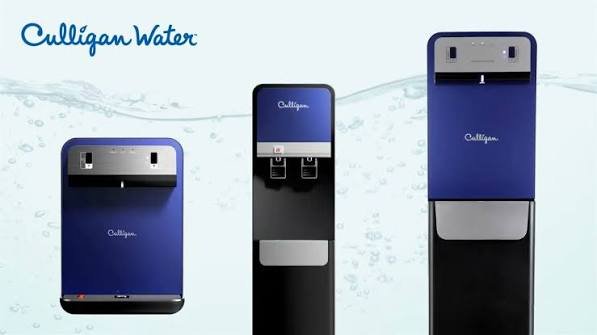
What Is a Bottleless Water Cooler?
A bottleless water cooler is a dispenser connected directly to your building’s water line. It filters the incoming water, then chills it, heats it, or serves it at room temperature on demand. There is no bottle on top and no jug to lift or reorder.
You will also see it called a point-of-use (POU) water cooler, a plumbed-in bottleless water cooler, a bottleless water cooler dispenser, or a water line bottleless water cooler. They all describe the same idea: your own tap water, treated at the point where you drink it.
Why More Homes and Workplaces Are Switching?
Most people move away from bottled coolers for a handful of practical reasons.
- No more heavy lifting. Standard jugs are awkward, and swapping them is a real problem for people with mobility limits or back issues.
- No running out. Supply is continuous, even on a busy Monday morning.
- Less storage. You no longer need floor space for spare bottles.
- Less single-use plastic. Fewer bottles move through delivery trucks and recycling streams.
- Often lower running costs. Tap water costs far less than delivered water, though you take on filters and servicing.
Whether the switch actually saves you money depends on usage, filter prices, and how your supplier or installer charges. More on that below.
How a Bottleless Water Cooler Works?
The process is the same across most models.
- Water enters through a feed line with its own shut-off valve.
- A sediment filter catches sand, rust, and silt.
- An activated carbon filter reduces chlorine taste and odour.
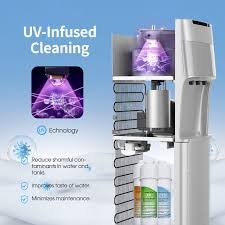
- Optional advanced stages such as reverse osmosis (RO), ultrafiltration, or ultraviolet (UV) treatment add further protection.
- A tank holds the water. A compressor or a thermoelectric module chills it, and a heating element warms the hot tank.
- A tap, lever, or touchless sensor dispenses it.
- RO models send reject water to a drain.
The important point: the bottleless water cooler can only improve the water it receives. A good unit on a poor supply still needs the right filters.
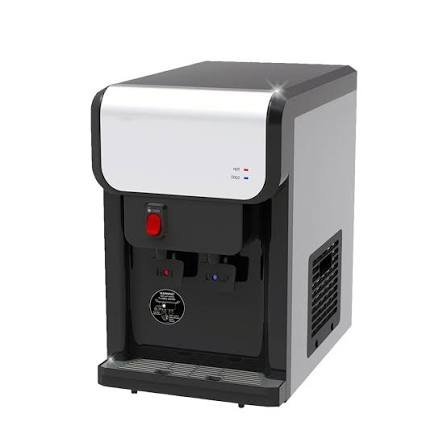
Types of Bottleless Water Cooler
By Installation Style
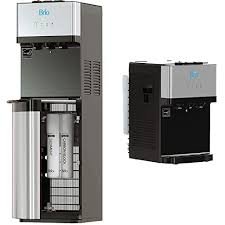
- Countertop models are compact and suit small kitchens, reception desks, and renters who want a simple setup. Capacity per hour is lower.
- Freestanding models are the familiar floor-standing coolers. They hold more bottleless water cooler and chill faster, which suits busy offices, warehouses, and larger homes.
- Wall-mounted models save floor space and are common in corridors, schools, and public buildings.
- Under-sink systems hide the filtration and cooling out of sight and use a separate faucet. They look clean but usually need a technician.
- Bottle-filling stations are built for refilling personal bottleless water cooler, often with a sensor. You will see them in gyms, campuses, and transport hubs.
By Temperature Options
Models offer cold only, hot and cold, or hot, cold, and ambient. Commercial lines may add sparkling or extra-hot settings. Hot water is useful for tea, instant meals, and coffee, but in homes with children it needs a child lock.
By Cooling Technology
Compressor cooling is faster and handles heavy use bottleless water cooler and warm rooms better, but it is louder and costs more. Thermoelectric (Peltier) cooling is quieter and lighter, but slower and less effective in hot environments.
Filtration Explained: Choosing the Right Stage
Filtration is the decision that matters most, and it should start with your water source, not the brochure.
| Filter stage | What it does | Best for | Limits |
| Sediment | Removes particles, rust, silt | Nearly every setup | Clogs faster with old pipes or dusty supplies |
| Activated carbon | Reduces chlorine, odour, some organics | Treated municipal water | Does not remove dissolved salts |
| Ultrafiltration (UF) | Physical barrier against bacteria and many microorganisms | Microbial concern, low-salinity water | Does not reduce dissolved salts |
| Reverse osmosis (RO) | Reduces dissolved solids, many salts and metals | High-TDS or brackish water | Needs pressure and a drain; produces reject water |
| UV (UVC) | Inactivates microorganisms | Extra microbial protection | Needs a working lamp and reasonably clear water |
Match the Filter to Your Water Source
- Municipal supply: sediment plus carbon is often enough for taste and chlorine. Add UF or UV if local microbial safety is a concern.
- Borehole or well water: get a lab test first. Dissolved minerals, salinity, and contamination vary widely, and RO plus UV is common where TDS is high.
- Tanker or overhead tank supply: water may sit for days, so sediment control and microbial protection matter more.
- Older buildings: corroded pipes can add sediment and metals. Strong pre-filtration extends cartridge life.
A basic TDS meter gives a quick reading of dissolved solids, but it cannot tell you what those solids are. A laboratory test is the only way to confirm specific contaminants.
What About PFAS and Heavy Metals?
Some filters are marketed as reducing PFAS or lead. Read the certification scope carefully. A certificate covers the specific contaminants and test conditions listed for that exact cartridge, not “all contaminants.” If PFAS or lead is your concern, look for a cartridge certified for that specific claim and confirm it on the certifier’s public database.
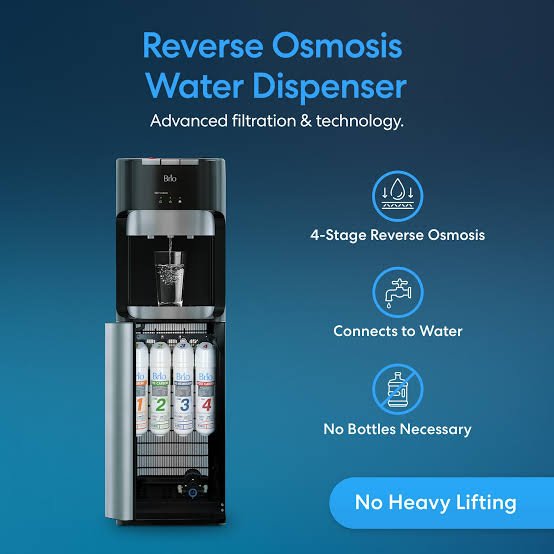
Certifications and Standards to Look For
Marks tell you what has been independently tested.
- NSF/ANSI 42: aesthetic effects such as chlorine taste and odour
- NSF/ANSI 53: health-related contaminant reduction
- NSF/ANSI 58: reverse osmosis systems
- NSF/ANSI 55: ultraviolet treatment
- NSF/ANSI 372: low-lead material content
- UL 399: safety for drinking bottleless water coolers
- Energy Star: energy efficiency where listed
- CE marking and national standards bodies: relevant outside North America
The World Health Organization’s drinking-water guidelines are a useful reference point for water quality in general. Treat a certification claim as unproven until you find the model or cartridge in the official database.
Bottleless Water Cooler vs. Bottled Water Coolers
| Factor | Bottleless (point-of-use) | Bottled |
| Water source | Your mains or tank, filtered | Delivered jugs |
| Upfront cost | Higher (unit plus installation) | Lower |
| Ongoing cost | Filters, power, servicing | Recurring jug purchases |
| Convenience | Always available | Reordering and lifting |
| Space | Needs plumbing access | Needs storage for spares |
| Portability | Fixed location | Easy to move |
| Quality control | Depends on your filters and upkeep | Depends on the supplier |
| Plastic waste | Lower | Higher |
Some people assume bottled water is automatically purer. In practice, many delivered brands start from municipal water too, so the real question is how well the bottleless water cooler water is treated and how well the equipment is maintained.
Pros and Cons
Pros
- Continuous supply with no deliveries
- Filtration you control and can upgrade
- Less storage space and no heavy lifting
- Fewer plastic jugs
- Hot, cold, and ambient options in one unit
Cons
- Higher upfront cost
- Needs a water line, power, and sometimes a drain
- Quality depends on timely filter changes and sanitisation
- Stops chilling and heating during a power cut
- Fixed in place
What Does a Bottleless Water Cooler Cost?
Prices vary widely by country, brand, capacity, and filtration, so a single number would mislead. Build your own estimate from these pieces.
| Cost item | What to check |
| Unit price or rental fee | Compare equal capacity and filtration |
| Installation | Technician visit, fittings, drain line, booster pump |
| Filter sets | Price per set and replacement interval |
| Electricity | Rated wattage and standby draw |
| Servicing | Sanitisation visits and call-out charges |
| Reject water (RO) | How much water goes to the drain |
Filter cost deserves special attention. Independent reviewers regularly flag it as the main drawback. Some home models rely on filters with a stated life measured in gallons, which can become a real expense in high-use households.
A simple way to compare: add the unit, installation, and a year of filters, power, and servicing. Divide by the litres you expect to dispense. Then compare that per-litre figure with what you pay for bottles today.
Some national rental providers advertise savings of 30 to 80 percent against delivery. Treat that as a vendor claim and test it against your own numbers.
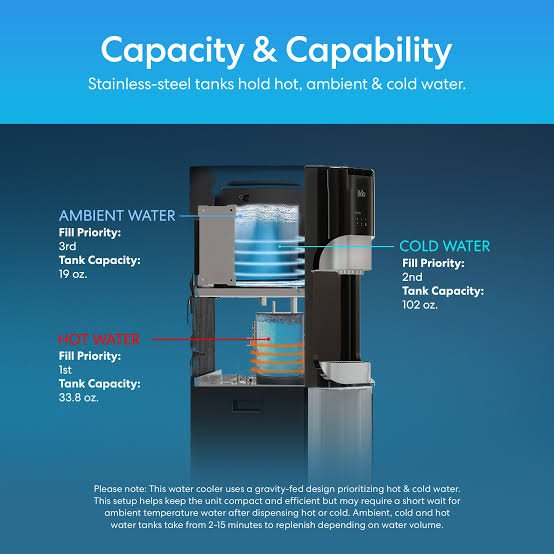
Rent or Buy?
| Header label | Rent / service plan | Buy |
| Best for | Offices and businesses wanting service handled | Homes and long-term users comfortable with upkeep |
| Upfront cost | Low | Higher |
| Maintenance | Often included | Your responsibility |
| Flexibility | Monthly cost often falls as the contract term lengthens | Full control and no contract |
| Watch for | Lock-in, price rises, early-exit fees | Filter supply and technician access |
Before signing a rental, ask exactly what is included: filter changes, sanitisation, repairs, and replacement time if the unit fails.
Installation:
DIY or Technician?
Many countertop units ship with a kit and can be fitted by a confident DIY in under an hour. RO systems, drain connections, and under-sink installs are better left to a technician.
Typical steps
- Choose a spot near a cold water line and a power outlet, away from direct sun and heat.
- Check the supply pressure.
- Close the isolation valve.
- Fit the feed adapter and connect food-grade tubing.
- Add a drain line if the bottleless water cooler system uses RO.
- Install the filters and flush them as instructed.
- Power up and run the sanitising cycle if the unit has one.
- Check every joint for leaks, and again after 24 hours.
Renters: check your lease first. Some countertop models connect with a simple tap adapter and need no drilling, but many landlords still require permission to alter plumbing.
Low or unstable pressure: a booster pump or a small storage tank can help. Low pressure is a common reason RO units underperform.
Maintenance: The Part Most Buyers Underestimate
A bottleless water cooler is safe only as long as it is looked after. Overdue filters can slow flow and weaken treatment, and stagnant water can encourage biofilm, a slimy microbial layer, inside tanks and lines.
| Task | Typical timing (follow your manual) |
| Wipe tap and drip tray | Weekly, daily in shared spaces |
| Sediment filter | Every few months, sooner with dusty or sediment-heavy water |
| Carbon filter | Roughly every six months |
| RO membrane | Often one to three years, depending on water |
| UV lamp | Commonly yearly |
| Tank sanitisation | About every six months, or as the maker advises |
Self-cleaning and UV-assisted models reduce the workload but do not eliminate it. Filters still need changing.
Does It Work During a Power Cut?
Chilling and heating need electricity, so both stop in an outage. Some models still dispense room-temperature water from the line, though behaviour varies. If outages are frequent where you live, check how the unit behaves without power and consider a storage tank or backup supply.
Where It Fits Best?
- Offices and co-working spaces: freestanding hot and cold models handle shared demand.
- Hotels and restaurants: units at guest or staff stations, and under-counter bottleless water cooler systems for kitchens.
- Clinics and schools: touchless dispensing and UV or UF treatment support hygiene.
- Factories and warehouses: durable, high-capacity units with strong pre-filtration.
- Homes: countertop models for small households, freestanding for larger ones.
When it does not fit?
Places with no plumbing access, very unstable supply with no pump or tank, or short-term spaces where you cannot touch the plumbing. A bottled cooler or a refillable system can be the better call there.
Common Mistakes to Avoid
- Buying before testing the water
- Ignoring supply pressure
- Skipping or delaying filter changes
- Placing the unit in direct sun or a hot corner
- Choosing a model whose filters are hard to find locally
- Trusting a certification claim without checking the database
- Forgetting a hot-tap child lock at home
- Signing a rental without reading the exit terms
Alternatives
| Option | Suits | Limitation |
| Bottled water cooler | No plumbing access | Jug costs and handling |
| Under-sink RO with a faucet | Home kitchens | No integrated chilling or heating |
| Filter pitcher | Very small budgets | Low volume, no temperature control |
| Faucet-mounted filter | Renters | Limited filtration |
| Whole-house filtration | Property-wide water quality problems | Does not chill or heat |
Finding a Provider or Installer Near You
Search with your own city or country, such as “bottleless water cooler rental in [your city]” or “water cooler installation near me.” Provider types include national rental brands, independent water-treatment dealers, plumbers, and facility-management companies.
When comparing providers, ask about:
- Trained technicians and response time
- Whether filters and sanitisation are included
- Certified products and warranty
- Filter stock in your area
- Contract length and exit terms
Local water hardness, salinity, power reliability, and drain access all affect which system suits you, so a provider who asks about your bottleless water cooler is a good sign.
How to Decide?
- Reliable mains water and steady demand: buy or rent a filtered bottleless cooler.
- Hard, salty, or uncertain water: test first, then choose RO with UV or another certified stage.
- Want service handled for you: rent with a clear service plan.
- Cannot connect to plumbing: stay with bottled for now.
- Frequent power cuts: pick a unit with a good storage tank and consider backup power.
Frequently Asked Questions
What is a bottleless water cooler?
It is a water dispenser plumbed into your mains that filters tap water and serves it cold, hot, or at room temperature, with no bottle needed.
Are bottleless water coolers safe?
Yes, when the filters match your bottleless water cooler, they are replaced on schedule, and the unit is sanitised. Neglected equipment is the main risk.
Do bottleless water cooler need a drain?
Only some. RO models need a drain for reject water. Carbon and UF models generally do not.
How often should I change the filters?
It depends on the model and your water. Many carbon filters are changed about every six months, but follow the manufacturer’s schedule.
Is a bottleless water cooler cheaper than bottled water?
Often, at moderate to high usage, because tap water costs less than delivery. Add filters, power, and servicing to your own comparison.
Can I install one myself?
Simple countertop units often can be self-installed. RO and under-sink systems are better handled by a technician.
Do they work without electricity?
Cooling and heating stop. Some units may still dispense room-temperature water, so check the specifications.
Can renters use a bottleless water cooler?
Often yes, with a countertop model and a tap adapter. Check your lease before changing plumbing.
Conclusion
A bottleless water cooler removes the hassle of jugs and gives you better control over what you drink. It works best when your filtration matches your water, your supply pressure is adequate, and someone is responsible for filter bottleless water cooler and cleaning.
Start with your water: test it, count your users, and set your budget for the first year and beyond. Then shortlist certified models, compare rent against buy, and set reminders for filter changes from day one.
Unfulfilled Points: Current model-by-model prices and exact search-suggestion wording could not be verified from reliable sources, so I left them out rather than guess.
These information about Projector Rental are gathered from different surveys, medical tests and tech giants like Amazon, Techradar and more. Our top priority is to provide you valuable information.
For More Details About Different Water Filters Click Here