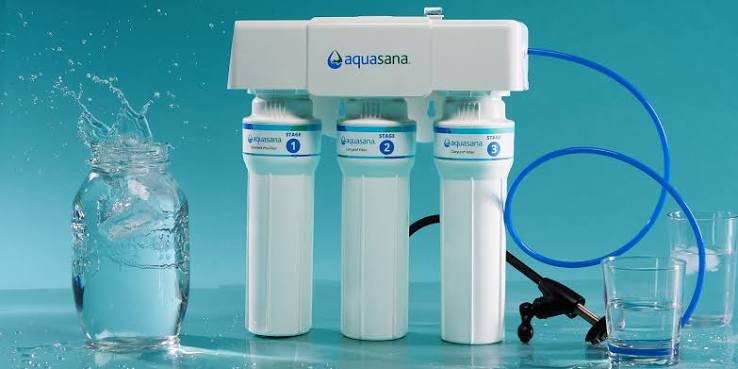
Filtered Water: What It Is, What It Removes, and How to Choose the Right Filter?
Filtered water is tap or source water that has passed through a filter to reduce contaminants such as chlorine, lead, PFAS, sediment or microbes. What it removes depends entirely on the filter. Some reduce taste and odor only, while others are certified for health-related contaminants.
Most people searching this topic are asking one of three things: what is it, is it actually better than what comes out of the tap, and which filter should I buy? This guide answers all three.
What Is Filtered Water?
Filtered water has been run through a physical, chemical or biological barrier that catches or neutralizes unwanted substances. The process might be as simple as a carbon cartridge in a pitcher, or as involved as a multi-stage reverse osmosis system under your sink.
You will see several related terms, and they are often used loosely:
- Filtered water: specific contaminants are reduced, depending on the filter.
- Purified water: most dissolved solids and impurities are removed, usually through reverse osmosis, distillation or a similar process.
- Distilled water: boiled, then condensed as steam, which leaves nearly all minerals behind.
- Softened water: hardness minerals (calcium and magnesium) are swapped out through ion exchange. This is not the same as filtering.
Many competing articles blur the line between filtered water and purified. The practical distinction is simple. Filtered water is defined by what the filter was designed and tested to remove. Purified water is defined by how little remains in the water. A label alone tells you very little, so the certification matters more than the word on the bottle.
Why Filtered Water Matters?
Municipal filtered water in most countries is treated and tested before it leaves the plant. In the US, the EPA sets National Primary Drinking Water Regulations. In the EU, the Drinking Water Directive applies. The WHO publishes guidelines that many countries use as a baseline.
Quality can still change between the plant and your glass. Water travels through mains, service lines and household plumbing. Old lead pipes, solder and fixtures can add lead. Disinfectants such as chlorine and chloramine protect the supply but can leave a noticeable taste and form disinfection by-products like trihalomethanes (THMs).
Filtered Water at the tap is the last line of control. It reduces what you personally drink and cook with, whatever the plant or the pipes contributed.
There are practical reasons beyond health:
- Taste and smell: carbon filters are very effective against chlorine flavor.
- Appliance protection: sediment and scale shorten the life of coffee machines, ice makers and water heaters.
- Less single-use plastic: a good home system can replace a lot of bottled water.
Who Actually Needs It (and Who Probably Doesn’t)?
Not every household needs a high-end system. Match the effort to the situation.
| Situation | How useful is filtering? | What to look for |
| Older home, possible lead pipes or fixtures | High | Filter certified for lead reduction |
| Private well | High, after testing | Lab test first; often sediment, carbon, and UV or RO |
| Infant formula or immunocompromised household | Often worthwhile | Follow local health guidance on boiling and sterilizing |
| Chlorine taste or smell | Moderate | Certified carbon filter |
| Visible scale and spotting | Partial | Softener or scale control; carbon alone won’t fix hardness |
| Café, office, restaurant | High | Commercial multi-stage or RO system |
| Clean municipal supply, no taste complaints | Low | May not need one |
If your utility has issued a boil-water advisory, follow that advice. A standard taste-and-odor filter does not make unsafe water safe.
How Water Filtration Works?
Filters rely on a handful of mechanisms, often combined:
- Mechanical filtration blocks particles. Sediment filters and ultrafiltration membranes work this way.
- Adsorption makes contaminants stick to a surface. Activated carbon is the best-known example.
- Ion exchange swaps unwanted ions for harmless ones. It is used in softening and in some lead and nitrate reduction.
- Reverse osmosis (RO) pushes water through a membrane that blocks most dissolved solids.
- Ultraviolet (UV) disinfection inactivates bacteria, viruses and protozoa, but removes no chemicals.
- Distillation boils and condenses water.
Contact time matters as much as media. Filtered water that moves slowly through a dense carbon block gives contaminants more chance to be captured than water rushing through a loose cartridge.
Types of Filtered Water
| Filter type | Best for | Typically reduces | Main limitation |
| Pitcher (carbon) | Renters, single users | Chlorine, taste, some metals | Slow; frequent cartridge changes |
| Faucet-mount | Small kitchens | Chlorine, some lead (certified models) | Fit and flow rate |
| Countertop | Renters wanting more capacity | Varies by model | Takes counter space |
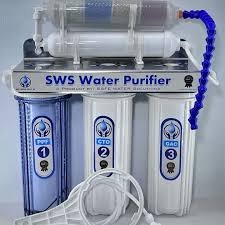
| Under-sink carbon block | Daily drinking and cooking | Chlorine, VOCs, lead, cysts (certified) | Needs installation |
| Under-sink RO | Broadest reduction at one tap | Dissolved solids, many metals, nitrates, PFAS (certified) | Wastewater, slower, reduces minerals |
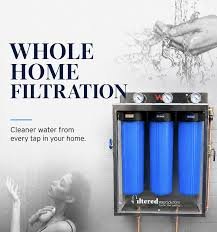
| Whole-house (point-of-entry) | Chlorine and sediment at every tap | Sediment, chlorine, some chemicals | Cost; may not target drinking contaminants alone |
| UV purifier | Wells, microbial risk | Bacteria, viruses, protozoa | No chemical removal; needs power |
| Ultrafiltration | Particles and microbes | Bacteria, cysts, turbidity | Not for dissolved chemicals |
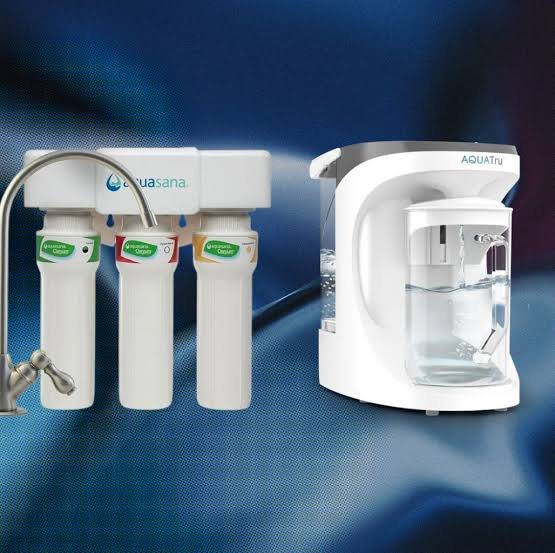
Brands such as Brita, PUR, ZeroWater, Berkey, Aquasana, Culligan and Kinetico cover different parts of this table. Performance varies by model, so check the data sheet instead of the brand name.
What Filtered Water Remove: A Contaminant Guide?
No single filter removes everything. Use this table as a starting point and confirm with your own water report.
| Contaminant | Common source | Technology that addresses it |
| Chlorine | Municipal disinfection | Activated carbon |
| Chloramine | Municipal disinfection | Catalytic carbon |
| Lead | Old pipes, solder, fixtures | Certified carbon block, RO, ion exchange |
| PFAS (PFOA, PFOS) | Industrial and consumer products | RO, certain carbon and ion exchange media (certified) |
| THMs and VOCs | Chlorine by-products, industrial runoff | Activated carbon |
| Nitrates | Fertilizer, wells | RO, ion exchange |
| Arsenic | Natural geology | RO and specialized media |
| Fluoride | Added or natural | RO and specialized media (standard carbon generally doesn’t) |
| Bacteria and viruses | Wells, compromised supplies | UV or a microbial-rated filter, or boiling |
| Giardia and Cryptosporidium | Surface water | Filters rated for cyst reduction |
| Sediment and rust | Pipes, wells | Sediment filters |
| Hardness | Natural geology | Softener, scale control, RO |
Certifications: What the Label Really Means?
“Removes toxins” is not a measurable claim. Third-party certification is. Bodies such as NSF International, the Water Quality Association (WQA), IAPMO and CSA Group test products against published standards.
The standards you will see most often:
- NSF/ANSI 42: aesthetic effects such as chlorine taste and odor
- NSF/ANSI 53: health effects, including lead and cysts
- NSF/ANSI 55: UV systems
- NSF/ANSI 58: reverse osmosis systems
- NSF/ANSI 177: shower filters (chlorine)
- NSF/ANSI 372: lead-free materials
- NSF/ANSI 401: certain emerging contaminants
- NSF/ANSI P473: PFOA and PFOS reduction
A common trap: a filtered water certified under Standard 42 for chlorine is not automatically certified for lead. Read the performance data sheet for the exact contaminant you care about. If it isn’t listed, assume it isn’t covered.
Filtered water vs. Tap vs. Bottled vs. Distilled
| Factor | Tap | Filtered | Bottled | Distilled |
| Cost per liter | Lowest | Low | Highest | Moderate to high |
| Taste | Varies | Usually improved | Varies | Flat |
| Minerals | Present | Mostly kept with carbon; reduced with RO | Varies | Almost none |
| Contaminant control | Regulated at the plant | Targeted by the filter | Varies by source and country | Very high |
| Plastic waste | None | Low | High | Moderate |
Bottled water is not automatically safer than tap. Rules differ by country, and sources range from municipal supplies to springs. For most households with decent municipal water, a certified filter on the tap gives the best balance of quality, cost and waste.
Distilled water has a place, but it is a specialist product. Appliance makers sometimes require it, for example for some CPAP machines and steam irons.
How to Choose: A Practical Decision Framework?
Work through these steps in order.
- Find out what is in your water. Read your utility’s annual water quality report. In the US this is the Consumer Confidence Report. If you use a private well, send a sample to a certified lab.
- Name your goal. Taste, lead, PFAS, microbes, scale, or all of the above.
- Match the technology. Use the contaminant table above.
- Check the certification. It must cover your specific contaminant.
- Count the true cost. Add cartridges, membranes, lamps, installation and, for RO, wastewater.
- Pick the format that fits your living situation. Renters usually choose pitcher or countertop; owners can add under-sink or whole-house systems.
Quick paths:
- “I just don’t like the taste.” A certified carbon filter is usually enough.
- “I’m worried about lead.” Choose a filter certified for lead reduction.
- “I’m on a well.” Test first. Expect sediment, carbon and often UV or RO.
- “I want the broadest reduction at one tap.” A certified RO system is the standard answer.
- “I run a business.” See the commercial section below.
What Does It Cost Filtered Water?
Prices vary by country, brand and installer, so treat these as typical ranges and confirm locally.
| System | Upfront | Ongoing |
| Pitcher or faucet-mount | Low (tens of dollars) | Cartridges every couple of months |
| Under-sink carbon | Low to mid hundreds | Annual cartridge replacement |
| Under-sink RO | Mid hundreds | Filters yearly or so; membrane every few years |
| Whole-house | Several hundred to a few thousand | Media or cartridge replacement |
| UV system | Mid hundreds | Lamp replacement, roughly annually |
Cartridges often cost more over time than the housing itself. A cheap pitcher with expensive refills can cost more per year than a mid-range under-sink system. Always compare cost per liter or per year, not the sticker price.
Installation and Maintenance
A basic under-sink carbon filter is a manageable DIY job if you are comfortable with plumbing fittings:
- Turn off the cold water supply.
- Mount the filter bracket under the sink.
- Connect the inlet to the cold line.
- Connect the outlet to the faucet or a dedicated tap.
- Flush the cartridge as the manufacturer directs.
- Check for leaks over the first day.
For RO, whole-house or UV systems, or if local code requires it, hire a licensed plumber.
Maintenance matters as much as the purchase. An old cartridge can stop working and, in some cases, become a place where bacteria grow. Set calendar reminders, keep your receipts and warranty, and retest your water after any plumbing change.
Regional Differences Worth Knowing
Water problems are local, which is why searches like “filtered water near me” and “[city] tap water quality” are so common.
| Region | Typical concerns | Usual priorities |
| Older US cities | Lead service lines | Lead-certified filters |
| US Southwest | Very hard water | Softening plus RO or carbon |
| Rural and well areas | Nitrates, bacteria, iron | Testing, UV, RO |
| UK | Limescale in the south and east, chlorine taste | Scale control and carbon (often a “water filter jug”) |
| Canada | Chlorine, older pipes in some areas | Carbon, lead-certified filters |
| Australia | Chlorine or chloramine, variable hardness | Carbon, softening where needed |
| Gulf states | Desalinated supply and building storage tanks | Point-of-use carbon or RO |
| South Asia | Microbial contamination, groundwater salinity, arsenic in some areas | RO with UV, local testing |
When you look for a local provider, ask for a water test, a written quote, proof of certifications and a clear service area. Reputable installers include licensed plumbers, dedicated water treatment dealers and utility-backed programs. Check response times, warranty terms and reviews before you commit.
Filtered Water for Business
Cafés, restaurants, offices, clinics and hotels use filtered water for more than drinking. It protects espresso machines, ice makers, dishwashers and boilers, and it keeps coffee and tea tasting consistent.
Common commercial options include multi-stage filtration, commercial RO, water softeners and bottleless water coolers connected to the mains. When comparing, consider daily volume, flow rate, available space, service contracts, rental versus purchase, and local health regulations.
When Filtering Isn’t Enough?
Filters are tools, not guarantees. Know their limits.
- Boil-water advisories: follow official instructions. Only systems rated for microbial reduction are relevant, and many pitchers are not.
- Unknown well water: never assume a carbon filter makes it safe. Test it.
- Hardness: carbon doesn’t fix scale.
- Infants: follow pediatric and local health guidance on preparing formula.
- Immunocompromised users: ask a clinician which water treatment is appropriate.
Common Mistakes to Avoid
- Buying a filter before testing your water
- Assuming all filters remove lead or PFAS
- Skipping cartridge changes
- Judging only by upfront price
- Trusting vague marketing words like “detox” or “purifies”
- Ignoring flow rate and water pressure
- Forgetting about RO wastewater
- Running hot water through a cold-only filter
Best Practices
- Review your water report every year.
- Choose certified products that name your target contaminant.
- Replace filters on schedule, not when the flow slows.
- Use filtered water for drinking, cooking, coffee and formula preparation.
- Keep notes of installation dates and model numbers.
- Retest after plumbing work or a change in water supply.
Alternatives to Consider
If a filter isn’t the right fit, other options include boiling (it kills microbes but doesn’t remove lead or chemicals), distillation, delivered or bottled water, replacing lead service lines, and chemical disinfection for emergencies. A softener is the better choice for a pure hardness problem.
Frequently Asked Questions
Is filtered water better than tap water?
It can be. Filtering improves taste and can reduce specific contaminants, but municipal tap water is already regulated and is often safe. The benefit depends on your water and the filter.
Is filtered water the same as purified water?
No. Filtered water has had certain contaminants reduced. Purified water has had most dissolved solids and impurities removed through methods such as RO or distillation.
Does filtered water remove minerals?
Carbon filters mostly leave calcium and magnesium in the water. RO and distillation remove most minerals.
Is filtered water safe to drink long term?
Yes, when the filter suits your water, is certified for your concern and is maintained on schedule. Neglected filters are the usual problem.
Does a water filter remove lead and PFAS?
Only models certified for them do. Look for NSF/ANSI 53 for lead, Standard 58 for RO, and P473 for PFOA and PFOS.
Does filtered water have fluoride?
Usually yes. Standard carbon filters don’t remove fluoride, while RO and some specialized media do.
Can I use filtered water for baby formula?
Many caregivers do. Follow your pediatrician’s and local health authority’s advice on sterilizing water.
Can I use filtered water in a CPAP machine?
Most manufacturers recommend distilled water, because minerals can build up inside the device. Check your device manual.
How often should I change my filter?
Follow the manufacturer’s schedule. Pitcher cartridges commonly last a couple of months, and under-sink cartridges often need replacing about once a year.
Is a whole-house filter worth it?
It is worthwhile if you want chlorine and sediment reduced at every tap and want to protect appliances. For specific drinking contaminants, you may still want a point-of-use filter.
Conclusion
Filtered water is not one product, it is a set of tools matched to specific problems. The right choice depends on what’s in your water, what you want to remove and which certification backs the claim.
Start with your water report or a lab test. Choose a certified system that names your contaminant, count the full yearly cost, and keep up with maintenance. If you’re still unsure, a local water treatment professional can test your water and recommend a system that fits.
Unfulfilled Points: Author and reviewer credentials, a last-updated date, and real-world test results were not included because they need your own details and data. Schema markup, internal links and images also sit outside the article text and need to be added in your CMS.
These information about Projector Rental are gathered from different surveys, medical tests and tech giants like Techradar and more. Our top priority is to provide you valuable information.
For More Details About Different Water Filters Click Here